Best Places to Visit in Jordan: 15 Must-See Destinations for First-Time Visitors
Discover the best places to visit in Jordan, from Petra and Wadi Rum to Amman, Jerash, Aqaba and the Dead Sea. This practical first-time guide explains what makes each destination worthwhile, who it suits, and how to combine Jordan’s major sights into a realistic itinerary.
Jordan is compact on the map but unusually varied on the ground. A first visit can move from Roman streets and Byzantine mosaics to sandstone canyons, desert horizons, coral water and the mineral-rich Dead Sea within a few days. The best places to visit in Jordan are not simply a checklist: they form logical regional clusters and the order in which you see them affects how much time you spend travelling versus exploring.
For many travellers, Amman is the practical starting point, Petra and Wadi Rum are the essential southern landmarks and the Dead Sea provides a restorative finish. Add the north for classical history, the King’s Highway for landscapes and Crusader castles or Aqaba for the Red Sea. A private driver in Jordan can be particularly useful when combining sites that are difficult to connect efficiently by public transport, especially on multi-stop routes between Amman, Petra, Wadi Rum and Aqaba.
1. Petra
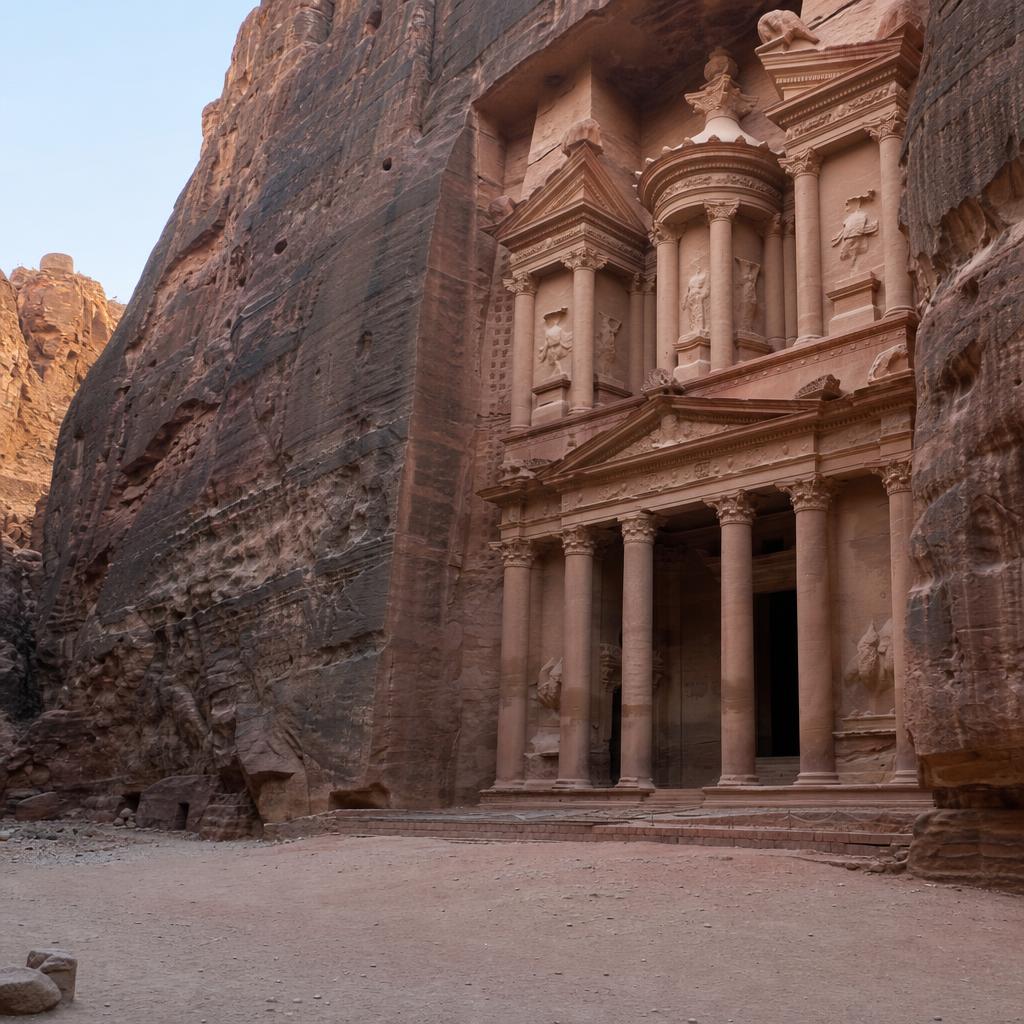
Petra is Jordan’s defining archaeological destination and for most first-time visitors, the strongest reason to travel south. The Nabataean capital was carved and built into rose-red sandstone valleys, with tomb façades, ceremonial spaces, water channels and long walking routes extending far beyond the famous Treasury. Its scale is what distinguishes it: Petra is not a single monument but an archaeological landscape that rewards time, stamina and curiosity.
The Siq approach to the Treasury is memorable, but it should be treated as the beginning rather than the whole visit. The Street of Facades, Royal Tombs, theatre, Great Temple area and Monastery trail reveal different aspects of the city. Paths can be uneven, exposed and demanding. So suitable footwear, water and an early start matter. For current access arrangements, ticketing and trail information, consult a detailed Petra visitor guide covering trails and practical tips and official sources before travel.
Petra suits history-focused travellers, photographers, walkers and families able to manage a substantial day outdoors. Give it at least one full day; two nights in Wadi Musa make the experience more relaxed. It fits naturally after Amman via the King’s Highway or Desert Highway and pairs best with Little Petra, Wadi Rum and for a slower southern itinerary, Aqaba. Travellers based in the capital can also consider a Petra day trip from Amman, though an overnight stay generally allows more time at the site.
2. Wadi Rum
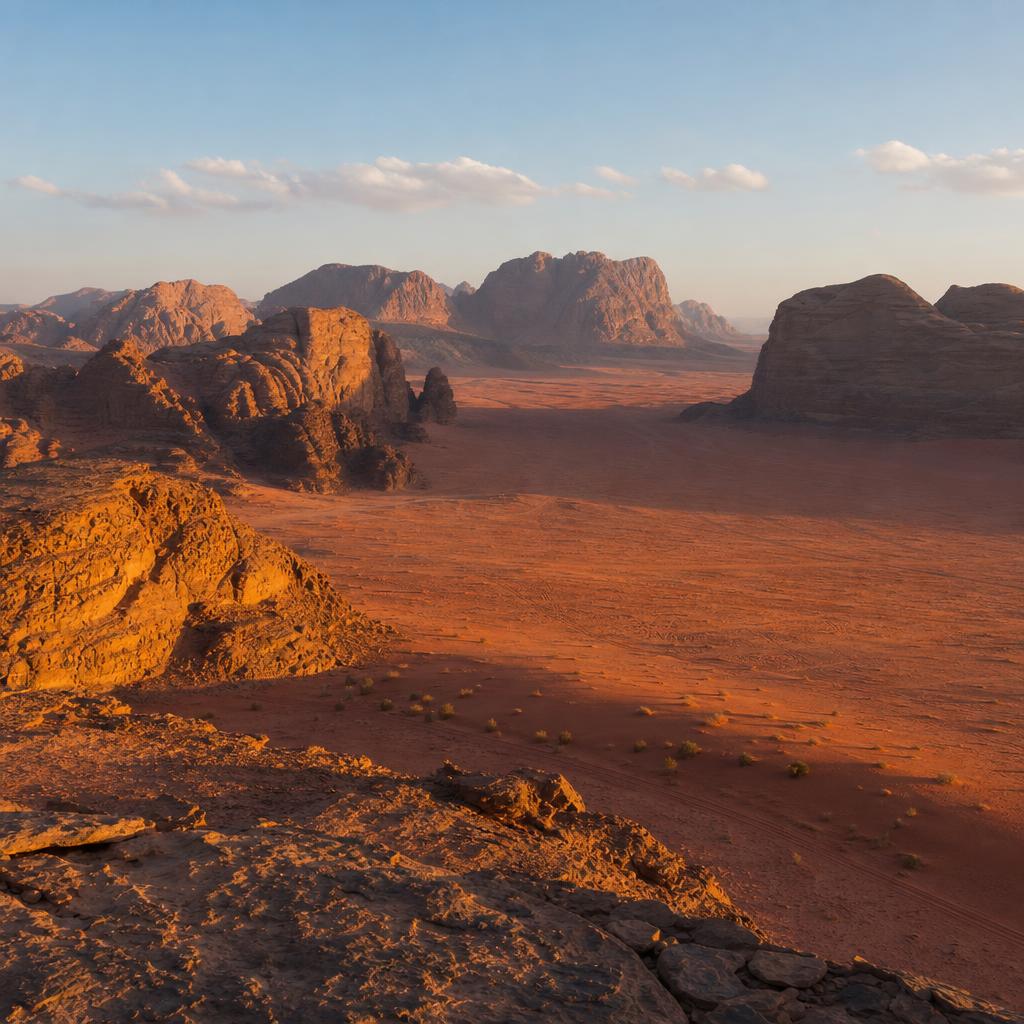
Wadi Rum is a protected desert of vast sandstone mountains, narrow canyons, natural arches and open rust-coloured plains. Its appeal lies in space, changing light and geology rather than a dense concentration of monuments. The landscape has long been associated with Bedouin communities and with the history of the Arab Revolt; it is also familiar to film audiences for its otherworldly appearance.
A visit can be as quiet or as active as you make it. Some travellers come for sunset, stargazing and a night in the desert; others focus on hiking, scrambling, camel experiences or vehicle excursions. Conditions vary markedly with heat, wind and season, while the practical character of camps and excursions differs widely. Read current details in this Wadi Rum guide to camps, Jeep tours and planning, and confirm precisely what any operator provides before booking.
Wadi Rum is ideal for couples, families, landscape photographers and anyone wanting a strong contrast to Petra’s archaeological density. One night is the classic first-visit format, while two nights suit hikers and people who value downtime. It is the most natural continuation from Petra and combines easily with Aqaba. For travellers starting in Amman, a Wadi Rum trip from Amman can simplify the long-distance logistics, but allow enough time to appreciate the desert rather than treating it as a brief stop.
3. The Dead Sea
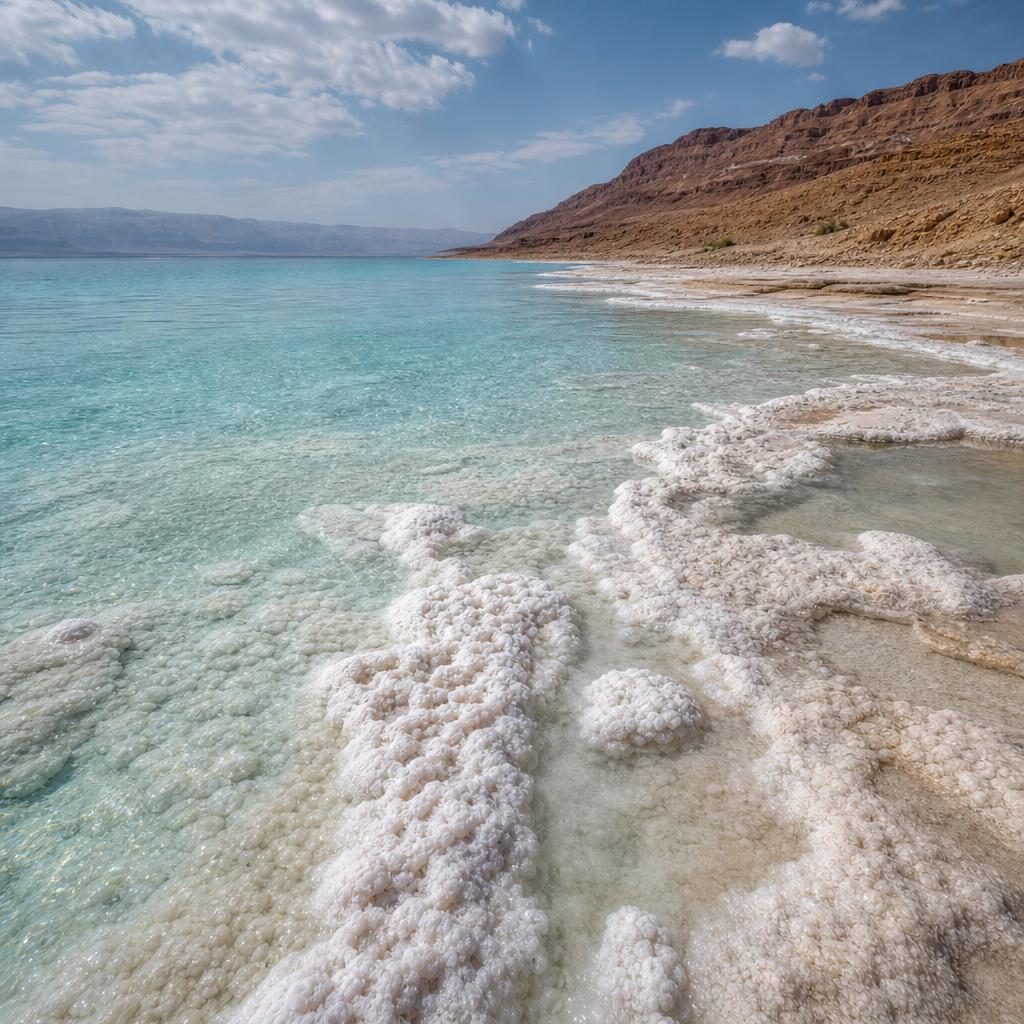
The Dead Sea is one of Jordan’s most distinctive natural experiences: an intensely saline body of water set at the lowest exposed elevation on Earth. Floating in its buoyant water, viewing the hills across the valley and resting by the shore create a very different kind of day from the country’s archaeological sites. The western shoreline is in the Palestinian territories, while Jordan’s developed visitor areas lie along the eastern shore.
The experience is straightforward but benefits from sensible precautions. Avoid getting water in your eyes, do not shave immediately beforehand, follow local safety guidance and rinse after bathing where facilities permit. The shoreline, water level and access points have changed over time, so check current conditions with your accommodation or an official source. There is more to this area than a quick photograph: it can be a welcome pause after long walks in Petra or before a flight from Amman.
The Dead Sea suits nearly every type of first-time visitor, particularly those balancing an active itinerary with rest. It pairs naturally with Madaba, Mount Nebo, the Baptism Site and can work as a half-day or full-day escape from the capital. A Dead Sea day trip from Amman is a practical option for short stays; travellers with more time may prefer an overnight visit after the King’s Highway.
4. Amman
Amman is more than an arrival city. Jordan’s capital is a layered, hilly metropolis where Roman ruins, Ottoman-era neighbourhoods, modern galleries, cafés, markets and excellent restaurants sit within a relatively compact central area. It offers the most useful introduction to everyday urban life in the country, as well as a convenient base for northern and central excursions.
Start around the Citadel, where the Temple of Hercules, Umayyad Palace and archaeological museum context overlook the city’s pale-stone hills. The Roman Theatre is nearby, while downtown streets offer juice stalls, bakeries, small shops and local restaurants. Jabal al-Weibdeh, Jabal Amman and Rainbow Street provide a different atmosphere, with independent spaces and views. Traffic can be heavy and the city’s steep terrain makes a route plan more valuable than it first appears.
Amman suits food-minded travellers, museum visitors, urban explorers and anyone who wants cultural context before heading into the desert. Plan two nights at the beginning or end of a longer itinerary. It pairs with Jerash, Ajloun, Umm Qais, Madaba, the Dead Sea and the Baptism Site. For ideas beyond the capital itself, see these best day trips from Amman.
5. Jerash
Jerash is among the most impressive Roman provincial cities in the Middle East. Its long colonnaded streets, oval plaza, theatres, temples, gates and churches make it unusually easy to read as a functioning ancient city. Although often described as “Pompeii of the East,” that comparison is imperfect; Jerash’s strength is its extensive urban layout and the way its monuments unfold across rolling terrain.
A visit is best approached as a walk rather than a rushed photo stop. Enter through the South Gate, take time in the Oval Plaza, follow the Cardo Maximus and climb towards the Temple of Artemis. Morning or late afternoon can be more comfortable in warmer months and uneven paving calls for stable shoes. The site is close enough to Amman for a day visit, yet substantial enough to deserve several unhurried hours.
Jerash is especially good for classical-history enthusiasts, families and visitors who want a major attraction without a demanding hike. Pair it with Ajloun for a full northern day, or continue to Umm Qais on a longer route. A North Jordan itinerary for Jerash, Ajloun and Umm Qais is useful when deciding whether to visit all three in one day or spread them over two.
6. Aqaba
Aqaba is Jordan’s only coastal city and its gateway to the Red Sea. After days of desert driving and archaeological walking, the sea changes the rhythm of a trip. Visitors come for warm-weather relaxation, beaches, diving and snorkelling, but Aqaba also has a working-city character, local seafood restaurants, markets and a waterfront shaped by its position at the meeting point of Jordan, Egypt, Israel and Saudi Arabia.
The underwater environment is the main draw, with coral reefs and marine life accessible through a range of local activities. Conditions, equipment standards, marine rules and available excursions can vary, so choose reputable providers and confirm what is included. Non-divers can still enjoy the coast, though access and facilities differ between public and private areas. This Aqaba travel guide offers a useful planning overview for first-time visitors.
Aqaba suits divers, snorkellers, families, winter sun seekers and travellers who want to add recovery time to a busy itinerary. Two nights work well for a first trip; more time is worthwhile for diving. It pairs seamlessly with Wadi Rum, around a few hours inland by road, and can be combined with Petra on a southern circuit. It is less essential than Petra or Wadi Rum for a very short first visit, but highly rewarding when the itinerary allows.
7. Madaba
Madaba is a small, manageable city best known for its Byzantine and Umayyad mosaics. The most famous is the sixth-century mosaic map at St George’s Church, a remarkable representation of the Holy Land that provides both artistic and geographical interest. Yet Madaba’s appeal is broader than one church: it is a useful cultural stop with a walkable centre and an atmosphere that feels gentler than Amman.
The city’s mosaic tradition appears in churches, archaeological areas and museums, while workshops provide context for the craft’s continuing presence. Madaba is not usually a destination that requires an overnight stay, but it is a thoughtful stop on a central Jordan route. Its position south-west of Amman makes it easy to combine with Mount Nebo, the Dead Sea and the Baptism Site.
Madaba suits cultural travellers, families, religious-history visitors and those who enjoy compact towns rather than large sites. Place it on the first or last day of a trip, especially when travelling between Amman and the Dead Sea. It also makes a natural beginning for a southbound journey along the King’s Highway.
8. Mount Nebo
Mount Nebo is a hilltop pilgrimage and viewpoint site traditionally associated with Moses viewing the Promised Land. Whether you come for faith, history or landscape, the value is in perspective: on clear days, the panorama opens over the Jordan Valley and towards the Dead Sea, Jericho and the distant hills beyond. The memorial church also contains significant mosaics.
The visit is generally brief, but it has a quiet, reflective quality that contrasts well with busier attractions. Visibility depends on weather and haze, so the far-reaching view should never be assumed. Check current visitor arrangements before setting out, particularly if you are travelling around religious holidays or on a tightly timed day.
Mount Nebo is best for religious travellers, mosaic enthusiasts and visitors assembling a central-Jordan circuit. Combine it with Madaba and the Dead Sea, or include it at the start of a King’s Highway drive towards Karak and Petra. It is not a substitute for a major archaeological day, but it is an excellent connective stop.
9. Umm Qais
Umm Qais, ancient Gadara, occupies a dramatic ridge in Jordan’s far north-west. The attraction combines Greco-Roman and later remains with expansive views towards the Sea of Galilee, the Golan Heights and the Yarmouk Valley. Black basalt stone gives the ruins a darker visual character than the pale limestone of Jerash, and the setting is as important as the surviving buildings.
There are theatres, colonnaded remains, tombs and the traces of a former Decapolis city, but visitors should come expecting a quieter, more atmospheric site than Jerash rather than a more complete one. Its distance from Amman makes it better suited to a full northern day or an overnight route than a rushed add-on.
Umm Qais suits repeat visitors, landscape lovers, classical-history fans and anyone interested in Jordan’s borderland geography. Pair it with Jerash and Ajloun, though attempting all three in a short winter day can feel compressed. It is especially appealing for travellers who want to move beyond Jordan’s headline attractions.
10. Ajloun
Ajloun offers a greener side of Jordan, particularly in cooler and wetter months. Its principal landmark is Ajloun Castle, a 12th-century fortress associated with the Ayyubid period and strategically positioned above forested hills. The castle’s defensive architecture, passages and views help explain the importance of this northern highland region in medieval conflicts and trade routes.
The surrounding governorate is also known for oak and pine landscapes, village roads and nature-oriented possibilities. Seasonal conditions matter: spring can bring green hills and wildflowers, while summer is dry and hot, and winter weather can affect driving. The castle itself is a manageable visit, but the region benefits from being treated as more than a roadside stop.
Ajloun suits castle enthusiasts, families, photographers and visitors seeking a break from desert scenery. Pair it with Jerash on a day from Amman, or add Umm Qais for a deeper north-Jordan route. It is particularly worthwhile for those visiting in spring or during milder weather.
11. The Baptism Site of Jesus Christ
The Baptism Site, commonly referred to as Bethany Beyond the Jordan, is a major Christian pilgrimage location near the Jordan River. It is associated by tradition with the baptism of Jesus and includes archaeological and religious features connected with early Christian practice. Its significance is spiritual and historical rather than monumental in the same way as Petra or Jerash.
A respectful visit requires attention to current entry procedures, dress expectations and site arrangements. The river environment and international boundary area give the place a particular sensitivity, while interpretation on site helps visitors understand the layers of tradition and archaeology. Allow time for the journey as well as the visit itself.
The Baptism Site is essential for many Christian pilgrims and valuable for travellers interested in the religious history of the region. It pairs naturally with the Dead Sea, Madaba and Mount Nebo. Those seeking a structured route through several major destinations may find the seven-day north-to-south Jordan experience useful as a planning reference; always review the current itinerary details directly before making decisions.
12. Karak
Karak is dominated by one of the region’s most substantial Crusader castles. Its immense stone walls, vaulted halls, subterranean passages and strategic position above the town reveal why medieval fortifications were central to control of the King’s Highway. The building’s scale can feel labyrinthine, and that is part of its appeal: Karak is not a polished palace but a rugged defensive complex with layers of Crusader and Islamic history.
The modern town is busy and functional, so allow for traffic and parking logistics when travelling independently. Inside the castle, lighting and surfaces may be uneven; a flashlight function on a phone can be helpful in darker areas. A visit works best when you are already driving south from Amman or north from Petra, rather than as an isolated detour.
Karak suits military-history enthusiasts, architecture lovers and travellers who prefer the scenic King’s Highway to the faster Desert Highway. Pair it with Madaba, Mount Nebo and Shobak on a longer day, or make it a central stop between Amman and Petra. This King’s Highway road trip guide from Amman to Petra helps put Karak and nearby stops into a realistic route.
13. Dana Biosphere Reserve
Dana Biosphere Reserve is Jordan’s leading choice for travellers who want nature and walking to take centre stage. The reserve spans striking changes in elevation and habitat, from highland plateaus to deep sandstone valleys and supports a notable variety of plants, birds and animals. Dana Village, with its old stone houses above the valley, adds cultural texture to the landscape.
This is a place to slow down. Hiking options range in difficulty and may be subject to seasonal, conservation or operational changes, so confirming current trail access and the weather with a local guide is required for your intended route. Temperatures can differ sharply between high ground and lower valleys, making layers and adequate water important.
Dana suits hikers, birdwatchers, photographers and travellers who want a quieter counterweight to Petra. One or two nights can transform a rushed itinerary into a more balanced journey. It pairs especially well with Shobak and Petra and can be incorporated into a southbound King’s Highway route. It is less suitable for visitors with only two or three total days in Jordan, when Petra and Wadi Rum usually deserve priority.
14. Shobak
Shobak Castle, also known as Montreal, stands on a hill south of Karak and north of Petra. Founded during the Crusader period, it is smaller and less restored than Karak but often more atmospheric because of its isolated setting and weathered masonry. The castle offers a useful sense of the chain of fortifications that once guarded routes through this part of the region.
Visitors can explore walls, towers, church remains and underground elements, although the condition of paths and access can change. Shobak is usually a short stop rather than a full destination, but it rewards travellers who enjoy historical context and do not need every visit to be highly curated.
Shobak suits independent-minded history travellers, road trippers and visitors staying near Dana or travelling the King’s Highway. Pair it with Dana for a nature-and-history day, or use it as a break between Karak and Petra. It is an excellent addition to a longer itinerary, not a reason to cut time from Petra on a first visit.
15. Wadi Mujib
Wadi Mujib is a dramatic gorge system that descends towards the Dead Sea. In suitable conditions, it offers one of Jordan’s most physical and memorable outdoor experiences: moving through a narrow water-carved canyon beneath towering rock walls. It is a powerful contrast to the open desert of Wadi Rum and the broad valleys around Dana.
This destination demands careful planning. Water levels, weather, seasonal closures, age restrictions, swimming ability requirements, safety procedures and route availability can change. Flash-flood risk is serious in canyon environments. Do not assume a particular trail is open and check directly with the responsible authority or official current source before travel. Wear appropriate footwear and follow all instructions on site.
Wadi Mujib best suits active, confident travellers who are comfortable in water and want an adventurous day. It pairs with the Dead Sea and can fit between Amman and the southern sites, depending on conditions and timing. It is not the right choice for every family group or for travellers seeking a low-effort nature stop.
How to combine Jordan’s top destinations
The most satisfying first itinerary usually follows geography. Start in Amman, explore the north or central sites, then travel south through Petra and Wadi Rum before finishing in Aqaba or returning via the Dead Sea. Trying to visit every attraction in a few days leads to long drives and shallow visits.
Useful combinations include:
- Amman, Jerash and Ajloun for a short history-led break.
- Madaba, Mount Nebo, the Baptism Site and the Dead Sea for religious history and relaxation.
- Karak, Shobak, Dana and Petra for a scenic King’s Highway route.
- Petra, Wadi Rum and Aqaba for Jordan’s essential south, desert and sea combination.
- Petra, Wadi Rum and the Dead Sea for travellers who want major highlights without adding the Red Sea.
For a concise route focused on the country’s two headline landscapes, review this Petra and Wadi Rum trip. Travellers with around five days can use this Jordan five-day itinerary to judge how much is realistically possible. If your trip is longer, the five-day north-to-south Jordan route illustrates how Petra, Wadi Rum, the Dead Sea and lesser-known stops can be connected without trying to do everything in a rush.
Recommendations by traveller type
For first-time visitors with limited time, prioritise Amman, Petra, Wadi Rum and the Dead Sea. This combination captures the country’s urban, archaeological, desert and natural sides. If you have only three or four nights, resist adding Aqaba, Dana and the far north unless one of them is a personal priority.
History lovers should add Jerash, Karak, Shobak, Madaba and Umm Qais. Petra remains essential, but these places show Jordan’s Roman, Byzantine, Islamic and Crusader layers more fully. Religious-history travellers should build around Madaba, Mount Nebo and the Baptism Site, with Petra and Jerash adding broader historical depth.
Active travellers should look beyond the main circuit to Dana and Wadi Mujib, while allowing enough recovery time around long drives and walks. Beach and diving travellers should make room for Aqaba, ideally after Wadi Rum. Families often do best with a measured route: Amman, Jerash, Petra, Wadi Rum and the Dead Sea, with activities selected according to children’s ages and comfort levels.
Season also shapes the best route. Spring and autumn are generally popular for outdoor sightseeing, while summer heat can make Petra, Wadi Rum and exposed castle sites more demanding. Winter can bring cool temperatures, rain and occasional weather disruption, but also greener northern landscapes and quieter travel. For seasonal context, see this guide to the best time to visit Jordan. Before finalising a route, consider the practical question of how many days to spend in Jordan, then leave room for rest, meals and the unexpected delays that make tightly packed itineraries less enjoyable.
Jordan’s best destinations work because they are different from one another. Give Petra the time to reveal its scale, stay long enough in Wadi Rum to see the light change, and use the Dead Sea, Aqaba or Dana to slow the pace. The result is not just a list of attractions, but a journey through some of the Middle East’s most varied landscapes and histories.