How Many Days Do You Need in Jordan? 3, 5, 7 and 10-Day Trip Planning
Wondering how many days in Jordan are enough? Compare realistic 2–3, 4–5, 6–7, 8–10 and longer trip lengths, with practical advice on Petra, Wadi Rum, the Dead Sea, Aqaba, road travel and choosing a pace that suits your interests.
Choosing the Right Length for a Jordan Trip
The practical answer to how many days in Jordan depends less on the country’s size than on the pace you want. Jordan’s headline places—Amman, Jerash, the Dead Sea, Petra, Wadi Rum and Aqaba—can be connected in one journey, but they are not next door to one another. Arrival and departure times, border crossings, seasonal daylight, heat, hiking ambitions and the number of archaeological sites you enjoy all make a meaningful difference.
A short Jordan trip can deliver a powerful introduction. A longer one allows room for the north, the Dana region, a second day at Petra, time in Wadi Rum without rushing onward, and restorative time by the Red Sea or Dead Sea. The key is to avoid treating every famous stop as a tick-box. Jordan rewards travellers who leave space for walking, viewpoints, meals, small detours and the reality of road travel.
For most first-time visitors, five to seven nights is the most balanced range. Three days can work if Petra is the priority. Ten days or more suits travellers who want both the classic southbound route and the country’s quieter landscapes, biblical and Roman-era sites, nature reserves, or a slower beach-and-desert finish.
The factors that determine how many days you need
Before choosing a trip length, consider what must be in the plan and what can be saved for another visit. The following questions are more useful than simply counting attractions.
Your arrival and departure points
Many international visitors arrive through Amman, while some combine Jordan with a regional journey and enter or leave through Aqaba or a land border. Flights that land late or leave early can turn a nominal five-day trip into three and a half usable sightseeing days. Build the plan around actual available time, not just the number of calendar dates.
Amman is a natural starting point for the north and central parts of the country. Aqaba is convenient for the Red Sea and the far south. If your flights use different airports, a north-to-south or south-to-north route may reduce backtracking. If they use the same airport, decide whether the extra driving involved in returning is worthwhile or whether a more focused regional trip would be better.
What you mean by “seeing Petra”
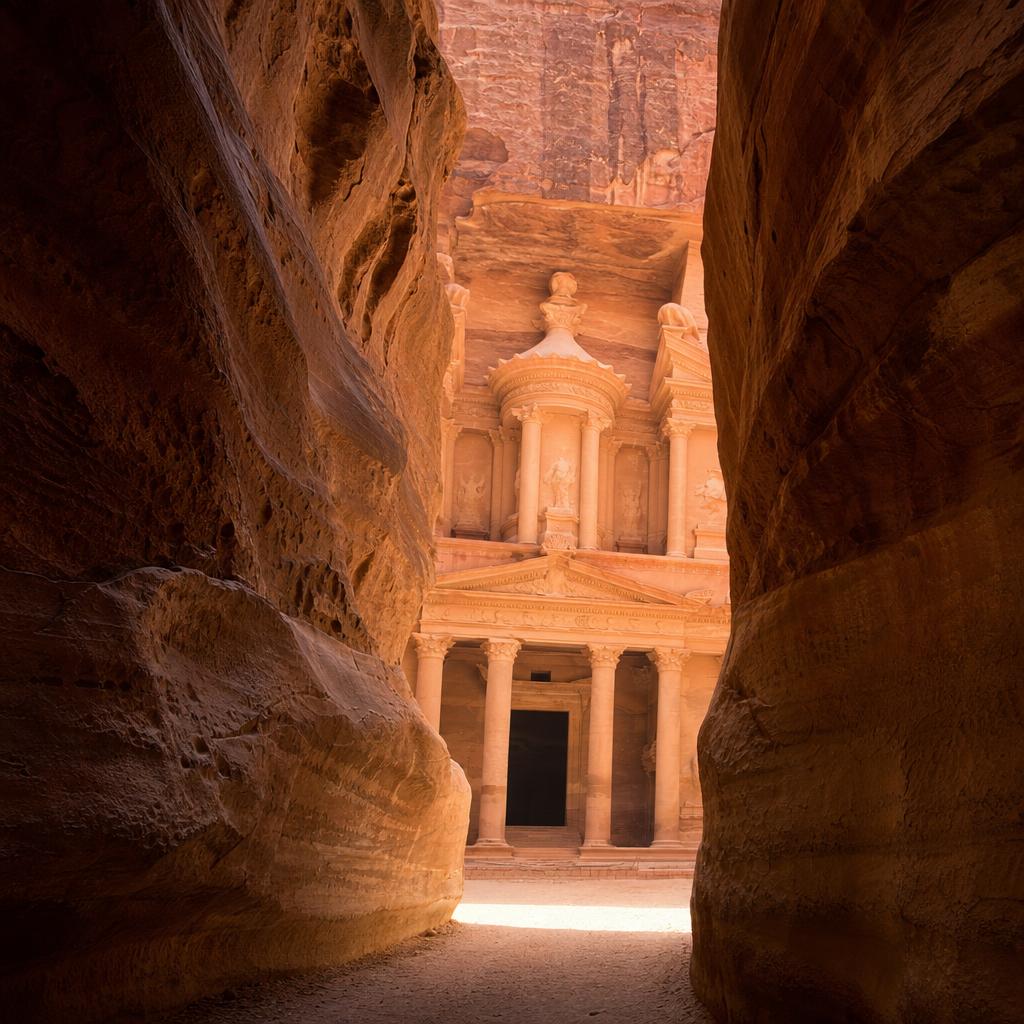
Petra is often the deciding factor. It is possible to see its most recognisable monuments in one long day, but that is not the same as experiencing the archaeological landscape properly. The walk through the Siq, the Treasury, the Royal Tombs, the main colonnaded area, the Monastery trail and other viewpoints require time and energy. Heat, crowds, photography stops and your fitness level will shape the day.
Travellers with a strong interest in archaeology or hiking should consider two days in Petra. A second visit makes the site feel less pressured and allows a choice of routes rather than one exhausting circuit. On a short trip, one full day can still be satisfying if expectations are realistic.
Whether Wadi Rum is an overnight or a stop
Wadi Rum is another place where timing changes the experience. A drive through the protected desert is not equivalent to an evening and night there. The desert is most atmospheric around sunset, after dark and in the early morning, when the light, temperature and scale are different from midday.
An overnight stay gives you time to settle in and makes a desert excursion easier to arrange without forcing a long transfer afterward. However, camps, transport arrangements and activities vary considerably, so confirm exactly what your chosen accommodation or operator provides. Do not assume that a Jeep excursion, meals, guides or transfers are included unless they are explicitly listed.
Your appetite for long drives
Jordan is manageable by road, but a sequence of one-night stops can become tiring. A route that looks compact on a map may include urban traffic, mountain roads, photo stops, fuel breaks, hotel check-in, luggage handling and the time needed to reach each attraction from the highway.
Private road transport can make a multi-stop trip more flexible, particularly for families, small groups, travellers carrying luggage, or visitors who prefer to stop at viewpoints and sites along the way. If that suits your travel style, review options for a private driver in Jordan before fixing hotel nights and sightseeing days. Confirm the precise route, waiting time, luggage capacity and what is or is not included directly with the provider.
Your interests beyond the classic highlights
The standard circuit is genuinely excellent, but Jordan has much more than Petra and Wadi Rum. The north offers Roman cities, Islamic castles, museums, local food culture and biblical locations. The central-western part of the country has the Dead Sea, Madaba, Mount Nebo and the Baptism Site area. The south includes Dana, Shobak, Little Petra, Aqaba and expansive desert landscapes.
If your priorities are diving, birdwatching, hiking, religious heritage, photography or history, add days rather than squeezing those interests into spare hours. A focused trip is usually more enjoyable than a supposedly complete journey that leaves no time to be present.
How many days in Jordan for a first visit?
Two to three days: a focused introduction
Two full days is a tight but possible Jordan visit, best treated as a single-priority trip rather than a national tour. It can work for travellers with a short layover, a business extension, or a strong wish to see Petra and one nearby complement. The route should be chosen according to arrival point and energy level.
With three days, you can usually create a more coherent short journey. A common emphasis is Petra plus Wadi Rum, or Amman and the north plus the Dead Sea, rather than trying to cover both ends of the country in equal depth. Petra is generally the more logical choice for first-time visitors who have never seen it, while Amman and Jerash make sense for those particularly interested in urban life and classical archaeology.
A compact south-focused trip can pair a full Petra day with an overnight in Wadi Rum or time in Aqaba. For travellers beginning in Amman, the drive south and the return or onward transfer consume a meaningful share of the available time. It is important to accept that this will be a fast-moving trip.
For an example of the kind of short southern route that combines major highlights, see this two-day Dead Sea and Petra experience. Its current details should be checked carefully before booking, including the stated itinerary, accommodation, transport and exclusions.
Travellers who want Petra, Wadi Rum and Aqaba in one short break can also use this three-day Petra, Wadi Rum and Aqaba experience as a planning reference. In three days, choose only a limited number of activities at each stop. A rushed attempt to add Jerash, the Dead Sea and multiple hiking areas is likely to turn most of the journey into transit.
Short-trip priorities:
- Select one geographic direction: north and central Jordan, or Petra and the south.
- Keep the first and last day lighter if flights are involved.
- Reserve a full usable day for Petra if it is on your list.
- Consider an overnight in Wadi Rum rather than arriving and leaving in the same afternoon.
- Avoid adding a site merely because it is famous if it requires a major detour.

Four to five days: the best minimum for the classic route
Four to five days is the point at which Jordan begins to feel like a journey rather than a rapid sequence of transfers. This duration can accommodate Amman, one northern or central cultural stop, the Dead Sea, Petra and Wadi Rum, though there will still be choices to make. Aqaba may fit as a short stop, but it is better not to expect extensive beach time as well.
A five-day trip is especially suitable for travellers who want the country’s defining contrasts: a lively capital, ancient stone cities, a mineral-rich shoreline, rose-red Nabataean architecture and a desert night. The route normally benefits from moving in one direction, rather than returning to Amman after every excursion.
The north deserves selectivity at this length. Jerash is one of the region’s most impressive surviving Roman provincial cities and can be a rewarding addition for history-minded visitors. Amman itself also warrants some attention, whether for the Citadel, Roman Theatre, museums, neighbourhood cafés or a first taste of contemporary Jordanian life. Trying to give both Amman and Jerash extensive time while also reaching Petra and Wadi Rum may require sacrificing a slower morning or an additional Dead Sea stay.
The Dead Sea is often treated as a brief swim stop, but an overnight can be useful after a long flight or before heading south. The experience varies by access point and accommodation, and conditions can be affected by weather and water levels. Bring footwear, avoid shaving immediately before entering the water, protect your eyes from splashes and rinse afterward. Check current access arrangements with your chosen hotel, beach facility or operator.
For a broad example of what can be covered in this timeframe, consult the five-day Jordan route through Jerash, the Dead Sea, Petra and Wadi Rum. Use it as a framework rather than an assumption about inclusions: package components and operational details should always be verified from the current listing.
Readers looking for a narrative approach to pacing can also explore this five-day Jordan itinerary guide. It is useful for weighing where to overnight, but your own version should reflect flight times, seasonal daylight and the number of nights you want in Petra or the desert.
A realistic five-day trip usually means:
- One principal northern or central sightseeing day, not every northern attraction.
- One full Petra day.
- One Wadi Rum overnight or a carefully planned desert visit.
- Limited time in Aqaba, if included.
- At least one transfer day that includes only one or two meaningful stops.
Six to seven days: the most balanced first-time visit
For many travellers, six or seven days is the ideal answer to how many days in Jordan. It gives enough time to travel the classic route without reducing Petra or Wadi Rum to a hurried checklist. It also allows a better division between sightseeing, road travel and rest.
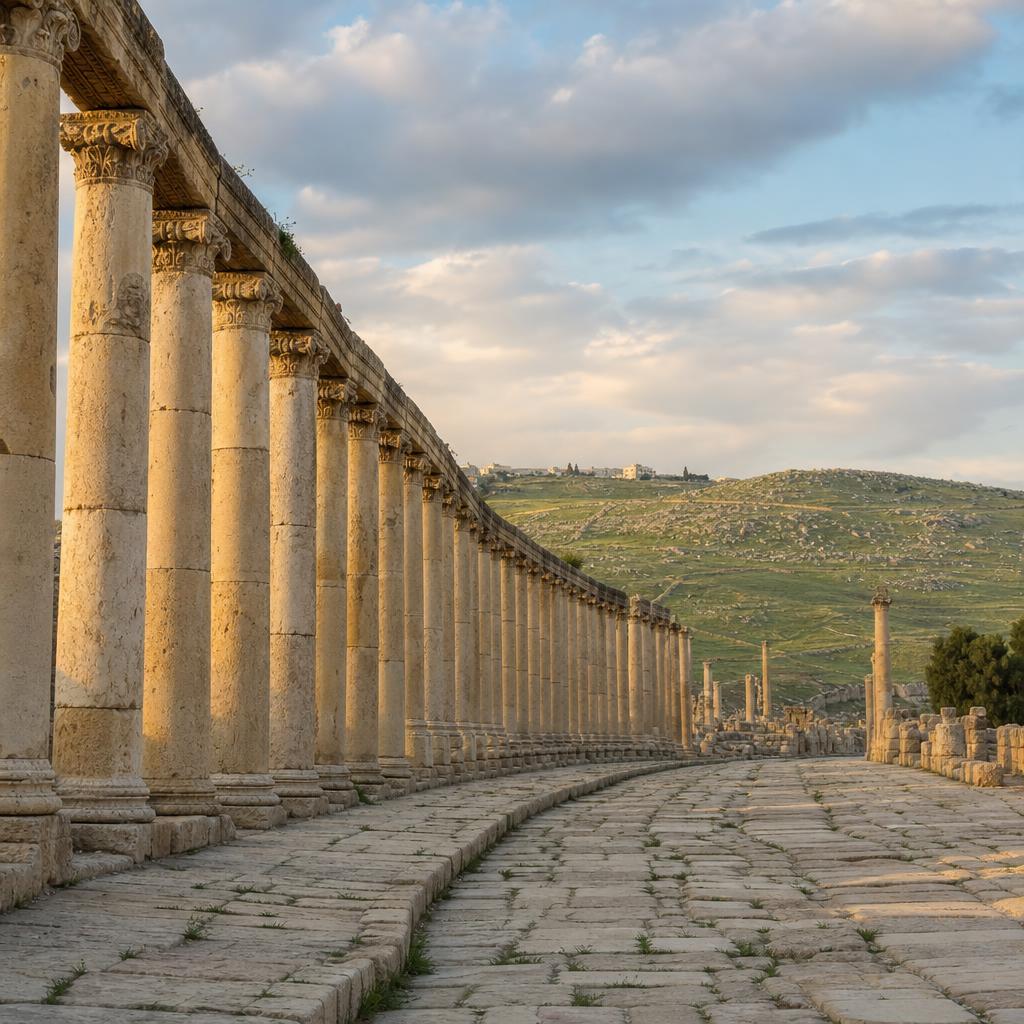
At this length, you can include Amman and Jerash, spend time around Madaba and Mount Nebo or the Dead Sea, travel via the King’s Highway or another scenic southbound route where appropriate, visit Petra with more breathing room, stay in Wadi Rum, and finish in Aqaba or return north. Exact routing will depend on road conditions, hotel locations and the practical order of your stops.
The value of seven days is not simply that you can see more. It is that you can make better choices within the sites. In Petra, a second day can be reserved for a longer hike, Little Petra, a quieter entrance time or a rest after the main walk. In Wadi Rum, you can arrive early enough to appreciate the landscape rather than just sleep there. In Aqaba, you can decide between an unstructured beach day, a boat outing, diving or simply a slower final night—subject to current weather, sea conditions and operator availability.
A week also makes room for the details that are easy to overlook: stopping for a Jordanian breakfast, allowing time for a sunset viewpoint, visiting a smaller museum, browsing a local market, or ordering dinner without watching the clock. These are often the moments that prevent a well-known route from feeling generic.
For one example of a fuller north-to-south structure, see this seven-day journey covering northern Jordan, the Baptism Site area, the Dead Sea, Petra, Wadi Rum and Aqaba. Check the latest listing for all practical information, especially any admissions, activity descriptions, accommodations and transfer arrangements.
You can also compare pacing ideas in this seven-day Jordan itinerary overview. A seven-day plan should still leave flexibility. If a particular interest matters more—such as Roman archaeology, desert hiking or Red Sea diving—give it an extra half day or a full day and remove a lesser priority.
Eight to ten days: Jordan with depth and recovery time
Eight to ten days is an excellent duration for travellers who do not want to choose between the classic sites and the country’s secondary highlights. At this pace, the trip can feel considerably less rushed, particularly if you want two days in Petra, more than one night in Wadi Rum, or a genuine break in Aqaba.
This length makes it easier to include Dana Biosphere Reserve or the broader Dana region. The area is valued for its dramatic escarpments, village setting and access to walking routes, though trail conditions, guides, access and seasonal suitability can change. Confirm current information through official reserve channels or your accommodation before relying on a specific hike.
It also opens up possibilities in the north and east. Depending on your interests, you might add longer time in Amman, the desert castles, Umm Qais, Ajloun, Salt, or more of the Jordan Valley. These places should not be treated as interchangeable additions. Umm Qais appeals to visitors drawn to archaeology and broad northern views; Ajloun can fit a landscape-and-castle day; Salt offers built heritage and a different urban character from Amman. Choose based on what genuinely interests you rather than attempting every named location.
Ten days are particularly helpful for active travellers. Jordan’s walking opportunities demand contingency time because temperature, trail difficulty and transport logistics matter. The same is true for divers and snorkellers in Aqaba, where weather and marine conditions shape what is possible. A longer trip lets you preserve a weather-sensitive day rather than forcing an activity into the only available slot.
A good eight-to-ten-day journey might include:
- Two or more nights in Amman, with time for Jerash or another northern day trip.
- A central Jordan segment around Madaba, Mount Nebo, the Dead Sea or nearby heritage sites.
- A slower southbound transfer with Dana, Shobak or Little Petra considered according to route and interests.
- Two days for Petra, especially for walkers and archaeology enthusiasts.
- One or two nights in Wadi Rum.
- Two or more nights in Aqaba for rest or water-based activities.
This is also the range in which hotel choice has more impact. A night inside or near a destination can save time compared with an accommodation far off the route. Conversely, a remote scenic stay may be worth the added transfer if relaxation is the goal. Map every overnight against the next morning’s plan before confirming reservations.
Ten days or more: a slower, interest-led Jordan journey
With more than ten days, there is no need to turn Jordan into a race. You can keep the major attractions while giving regions their own character. Spend time in Amman rather than using it only as an airport base. Explore the north without a pre-dawn departure. Add an extra Petra day, make space for Dana, and allow Aqaba to be a destination rather than a final overnight.
Longer stays suit travellers returning to Jordan as well as first-time visitors with focused interests. Photographers may want repeat visits at different times of day. Hikers may prefer a sequence of walks rather than a single trail. Families may appreciate recovery days between major drives. Food-focused travellers may want neighbourhood time in Amman, cooking experiences where available, local restaurants and markets rather than hotel meals alone.
A longer trip is also more resilient. A delayed flight, a hot afternoon, a tiring hike or a simple desire to linger does not derail the entire route. That resilience is valuable in a destination with outdoor sites and long walking days.
If you prefer a pre-arranged framework, browse the current selection of Jordan travel packages. Treat any package as a starting point for comparison: read the current itinerary line by line, ask about hotel standards and room arrangements, and confirm whether entrance fees, meals, guides, desert activities, airport transfers and local taxes are included or excluded.
Seasonal considerations when planning trip length
Jordan can be visited across much of the year, but season changes the pace that feels comfortable. If you are choosing dates as well as trip length, compare the best time to visit Jordan by season. Spring and autumn are commonly popular for outdoor sightseeing because daytime conditions are often more moderate, though demand can be higher and weather is never guaranteed. Summer can bring intense heat, especially at exposed archaeological and desert sites, making early starts, shaded breaks and additional rest time more important. Winter can be cool, wet and occasionally disruptive in higher areas, while the south and Aqaba may feel comparatively milder.
Do not assume a single forecast applies nationwide. Amman’s elevation, the Dead Sea’s low setting, Petra’s terrain, Wadi Rum’s desert climate and Aqaba’s coast can produce noticeably different conditions on the same trip. Pack layers for cooler evenings, sun protection for open sites, sturdy footwear for uneven stone, and sufficient water for walking days.
In hotter months, a five-day plan may feel more comfortable if it includes fewer midday archaeological stops and an overnight pause at the Dead Sea or Aqaba. In cooler months, travellers should preserve flexibility around driving routes and outdoor trails. Check official weather and road updates close to departure.
How to avoid overplanning Jordan
The best Jordan trip plans use a clear hierarchy. Start with three non-negotiables, then add secondary stops only if the route supports them. For many visitors, those non-negotiables are Petra, Wadi Rum and either the Dead Sea or Amman. For others, they may be Jerash, Petra and Aqaba. There is no universal correct list.
A useful planning method is to classify each stop:
- Essential: a place you would regret missing.
- Strong preference: worth including if it fits naturally.
- Optional: add only if there is time, energy and favourable conditions.
Then assess each day by its main purpose. A transfer day can include a short viewpoint or one historic site, but it should not be expected to carry four major experiences. A Petra day should not also be a long-distance driving day. A Wadi Rum overnight should allow arrival before the day is effectively over.
Leave unscheduled time in Amman and Aqaba. These are the easiest places to absorb a relaxed meal, shopping, laundry, a late start or a weather adjustment. Avoid placing every important reservation on the final day of the trip.
A simple decision guide
Choose two to three days if you have a limited window and are happy to focus on Petra and the south, or on Amman and the north. Expect a concentrated trip and minimise detours.
Choose four to five days if you want a first taste of the classic Jordan route, including Petra and Wadi Rum with selected northern or Dead Sea stops. This is the practical minimum for a multi-region journey.
Choose six to seven days if you want the strongest all-round first visit. You can combine the major highlights with better pacing, a fuller Petra visit and meaningful time in the desert.
Choose eight to ten days if you want Dana, extra Petra time, a more relaxed Aqaba stay, additional northern sites or outdoor activities without sacrificing the classics.
Choose more than ten days if you want a slower road trip, multiple hikes or dives, photography time, deeper regional exploration, or a buffer against weather and travel changes.
Ultimately, how many days in Jordan you need is a question of depth. Three days can introduce the country’s most iconic landscapes. A week can tell a more complete story. Ten days lets you travel with enough room for curiosity, rest and the unexpected pleasures that make a journey memorable.