The King’s Highway Jordan Road Trip: Best Stops from Amman to Petra
Follow Jordan’s King’s Highway from Amman to Petra with practical advice on Madaba, Mount Nebo, Wadi Mujib viewpoints, Karak, Dana and Shobak. Compare the scenic route with the Desert Highway, understand realistic timing, plan a road trip that leaves enough energy for Petra.
Why Take the King’s Highway to Petra?
The King’s Highway Jordan route is the country’s most rewarding north-to-south drive for travellers who want to understand the landscape between Amman and Petra rather than simply arrive. It threads across the highlands, passing Roman and Byzantine-era towns, biblical landscapes, deep canyon overlooks, Crusader fortresses, village bakeries and broad agricultural plateaus before reaching the sandstone country around Petra.
This is not the quickest way to travel from Amman to Petra. It is, however, the route to choose when the road itself is part of the trip. The modern road generally follows an ancient corridor that has connected settlements in the Jordanian highlands for centuries. Today, the experience is less about tracing every historic alignment than about making time for a sequence of places that reveal Jordan’s geography and history in unusually clear succession.
A direct journey can look short on a map, but the King’s Highway rewards a measured pace. Roads cross towns, climb and descend escarpments and invite detours to major sites. Treat it as a full-day road trip at minimum and preferably as an overnight or multi-day journey if Madaba, Karak, Dana and Shobak all matter to you.
King’s Highway Jordan Route Overview
The usual southbound route begins in Amman, reaches Madaba and Mount Nebo, continues through the central highlands near the Wadi Mujib gorge, then heads towards Karak. From there, the road continues south through changing plateau scenery towards Dana, Shobak and Wadi Musa, the town beside Petra.
The route is commonly described as running along or near Highway 35. In practice, navigation can involve town streets, connecting roads and occasional route decisions, so use an up-to-date mapping service on the day of travel. Roadworks, diversions, weather and local traffic can affect timing. The highway’s character also changes considerably: the northern section is relatively built up, while the south becomes more open and dramatic.
For most visitors, the major sequence is:
- Amman
- Madaba
- Mount Nebo
- Wadi Mujib and the central highland viewpoints
- Karak
- Dana area
- Shobak
- Wadi Musa and Petra
Trying to stop properly at all of these in one day can make the drive feel rushed. A more satisfying approach is to decide early what type of day you want: a heritage-focused day built around Madaba and Karak; a scenatic day with canyon overlooks and Dana; or a slower two-day journey with time for both fortresses and landscapes.
The King’s Highway is especially suitable for independent-minded travellers, photographers, families who prefer regular stops and visitors returning to Jordan who have already taken the faster southern route. It is less suitable for anyone with a fixed Petra entry plan, a late arrival in Amman, or only a narrow window between flights and accommodation check-in.
For travellers who need to reach Wadi Musa efficiently rather than build a sightseeing day around the road, it is worth comparing the scenic route with a direct Amman-to-Petra private driver option. That choice is about pace, not quality: the Desert Highway is practical, while the King’s Highway is experiential.
Planning the Drive: Time, Pace and Expectations
A road journey on the King’s Highway should be planned around stops rather than kilometres. A direct drive from Amman to Petra via faster roads can take substantially less time than a full scenic route, but the King’s Highway is not a sensible route for travellers who only have a few hours to spare.
As a broad planning guide, allow a full daylight day if you intend to visit two or three headline stops. Allow an overnight if you hope to explore sites rather than merely photograph their entrances. Karak Castle alone can absorb meaningful time and Dana is best appreciated when there is room for a walk, a viewpoint stop or an unhurried meal.
Build extra time into your plan for:
- Traffic leaving Amman and passing through towns
- Security checks or local congestion where applicable
- Parking and walking from parking areas to site entrances
- Uneven paths, steep stairs and large archaeological complexes
- Weather changes on exposed highland roads
- Short stops that become longer because the view is genuinely worth it
Start early. Morning light is often kindest at Madaba and Mount Nebo, while the later approach through the southern highlands can be especially attractive in softer afternoon light. But do not rely on reaching Petra late in the day for sightseeing. Petra deserves its own dedicated time and arrival after dark can make unfamiliar roads and hotel check-in less comfortable.
Fuel is straightforward to manage if you do not leave it until the last moment. Fill up before departing Amman or in a larger town, keep drinking water in the vehicle and carry snacks for longer stretches. Mobile coverage is generally available in many places but should not be treated as a substitute for downloaded maps and a charged phone.
In winter, mountain roads can be cold, wet or occasionally affected by severe weather. In summer, the highland route may feel more comfortable than lower desert roads in some sections, but temperatures still demand sun protection and water. Check official weather and road information before departure, particularly after heavy rain, when wadis and low-lying roads can be hazardous.
Madaba: Mosaics and a Gentle Start
Madaba is the natural first major stop south of Amman. It is a lived-in town with a long Christian heritage and a concentration of mosaic art that gives the King’s Highway an immediate sense of historical depth. It is not a museum town preserved behind gates; daily life continues around churches, shops, cafés and residential streets.
The best-known attraction is the mosaic map in the Greek Orthodox Church of St George. Created in the Byzantine period, the map is famous for its depiction of the Holy Land and Jerusalem. Even travellers who do not usually seek out religious sites may find it a useful introduction to the region’s layered geography: roads, rivers, cities and sacred places were being represented here many centuries before modern road maps.
Madaba also has other churches, mosaic workshops and archaeological remains. The town is compact enough that it works well as a focused stop rather than an all-day commitment. Give yourself enough time to walk a little beyond the principal church, have coffee and notice the mix of limestone buildings and everyday street life.
If you are travelling with children or people who prefer a gradual start to the day, Madaba is particularly useful. It is easier to explore than a large fortress or a steep nature trail and it breaks up the first leg without exhausting anyone before the longer drive south.
Mount Nebo: The View Across the Rift
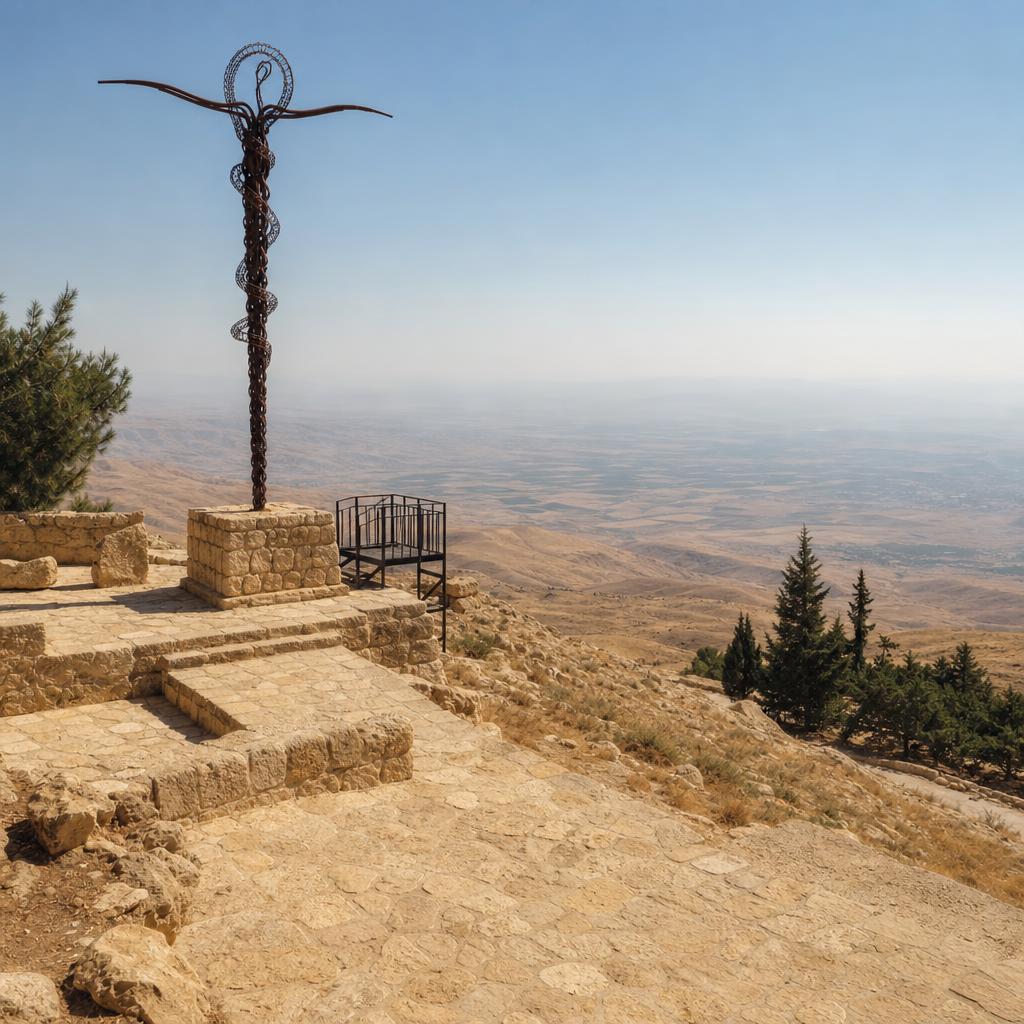
A short drive from Madaba, Mount Nebo sits on the western edge of the highlands with wide views towards the Jordan Valley, the Dead Sea and on clear days, distant terrain beyond. The site is associated in biblical tradition with Moses viewing the Promised Land. For many visitors, the main impact is visual: the dramatic drop from the plateau into the great rift landscape helps explain Jordan’s striking topography.
The site includes a memorial church and archaeological remains, but the setting is as important as the buildings. Take time to look west and south, then notice how quickly the road will carry you away from this fertile, settled landscape into more austere country.
Visibility varies with haze, cloud and season. A clear panoramic view should be considered a welcome possibility, not a guarantee. The site can also be exposed to wind and sun, so a light layer and sun protection are useful even when the weather in Amman feels mild.
Madaba and Mount Nebo are often paired because they complement one another: one is about close-up craftsmanship and urban history, the other about scale and landscape. Together they make an excellent opening chapter for a King’s Highway road trip.
Wadi Mujib: Viewpoint Context, Not a Casual Detour
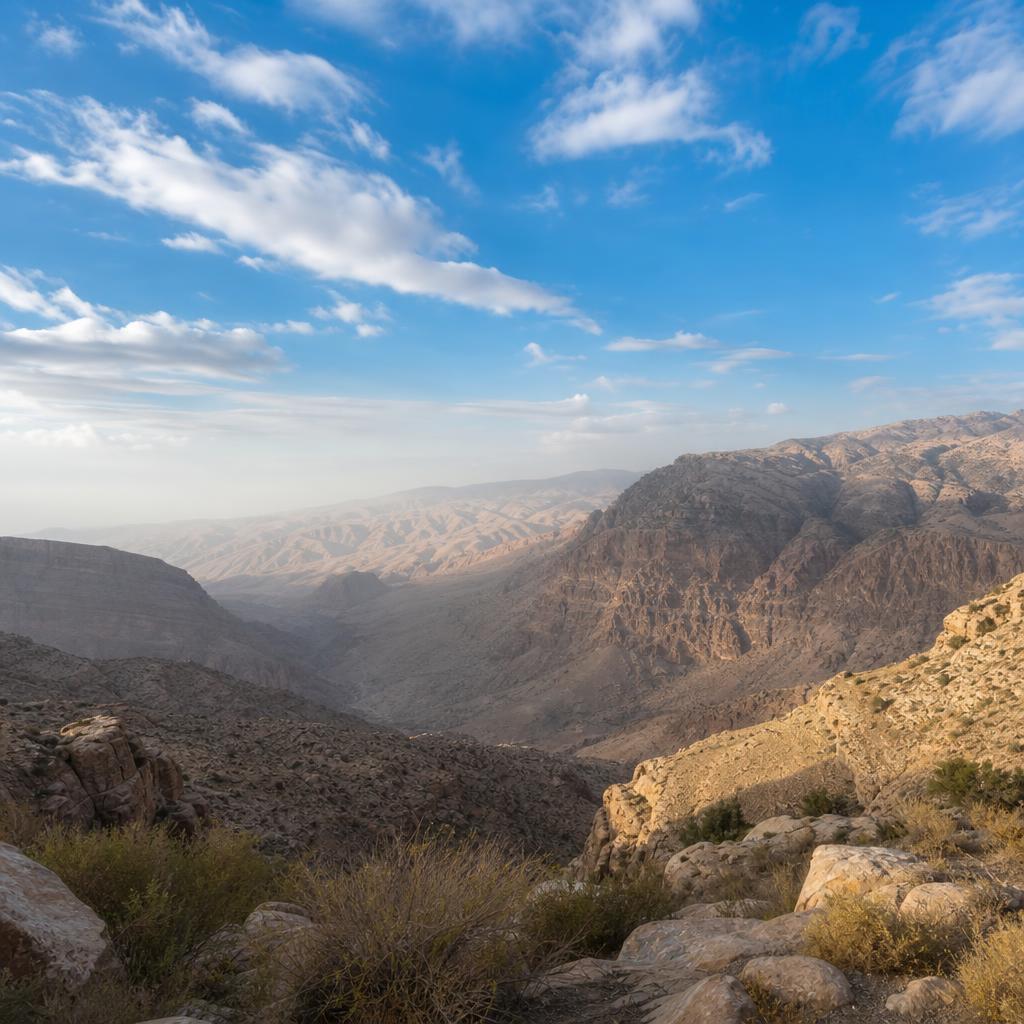
South of Mount Nebo, the King’s Highway enters some of the most dramatic terrain of the journey. The highlands are cut by vast wadis that descend towards the Dead Sea basin and Wadi Mujib is among the most impressive. From the road and surrounding viewpoints, the scale of the gorge is immediately apparent: dark folds of rock, deep drops and broad horizons make this section feel very different from the settled north.
It is important to distinguish between seeing Wadi Mujib from the highlands and visiting the Wadi Mujib reserve or undertaking a canyon activity. The famous water-based experiences are associated with specific access points and conditions, not simply with a roadside stop on the King’s Highway. Seasonal operation, weather, safety rules and activity availability can change. Check official information directly if a wadi activity is central to your plans.
For a road trip, the highland section is best approached as a scenic passage. Stop only where it is safe and permitted, avoid pulling over on blind bends or narrow shoulders and do not underestimate the wind near exposed viewpoints. A brief, well-chosen stop can be enough to appreciate the gorge without turning the day into a logistical detour.
This is also where the difference between the King’s Highway and the Desert Highway becomes most obvious. The faster route prioritises onward movement. Here, the road lets the escarpment become part of the story.
Karak: A Fortress with Serious Scale
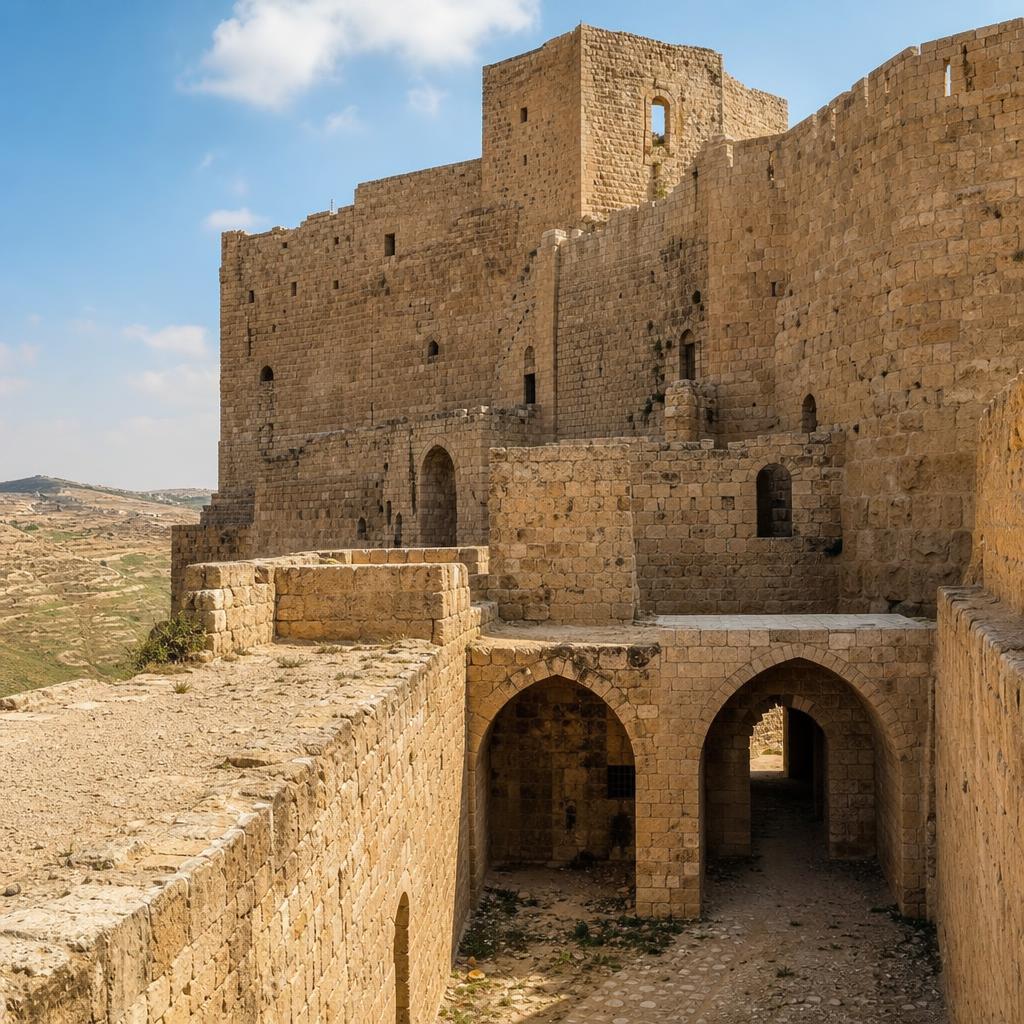
Karak is one of the essential historical stops on the King’s Highway, particularly for travellers interested in medieval architecture and the Crusader period. The town itself occupies a commanding position and Karak Castle dominates the ridge with thick walls, vaulted rooms, passages and defensive spaces that are far larger and more complex than a quick photo stop suggests.
The castle’s history spans multiple eras, including Crusader and Ayyubid rule and its architecture reflects long adaptation rather than one simple moment in time. It is easy to enter expecting a conventional castle and emerge surprised by its size. Interior spaces can be dim, uneven and atmospheric, while exterior viewpoints reveal the strategic logic of the site.
Wear stable shoes. Some surfaces are rough, staircases can be steep and visitors with limited mobility may find parts of the complex challenging. A torch function on a phone can be useful in darker areas, though it is wise to preserve battery for navigation. If you are especially interested in the castle, consider making Karak your major stop for the day rather than squeezing it between several rushed viewpoints.
Karak also provides a practical pause for food, supplies or a proper rest before continuing south. Rather than assuming a particular restaurant or facility will be open, assess options when you arrive and keep expectations flexible. The reward is not polished resort travel; it is a substantial historic town anchoring one of Jordan’s great road journeys.
Dana: The Landscape Opens Up
Beyond Karak, the King’s Highway gradually moves into a more open, sparsely populated landscape. The Dana area is often the point at which travellers slow down almost instinctively. The terrain shifts between pale rock, deep valleys, scrubby slopes and wide highland views, offering a strong contrast with both Amman and the built-up approaches to Karak.
Dana Biosphere Reserve is one of Jordan’s best-known protected landscapes, encompassing varied elevations and habitats. The village and reserve are not interchangeable, and the experience can range from a quick viewpoint stop to a longer hiking-based stay. If you plan to walk, research current trail access, conditions, guidance requirements and transport arrangements before setting off. Do not assume that every mapped track is appropriate for independent use.
For road trippers with limited time, Dana can still be worthwhile without a long hike. A scenic pause, a view into the valley and a meal in the area can reset the rhythm of the day. Those with an overnight available should consider whether this is the place to use it. Dawn and late afternoon bring out the contours of the escarpment in ways that a hurried midday stop cannot.
Dana is also where packing sensibly matters. Temperatures can feel markedly different from the Dead Sea or Petra, especially once the sun drops. Carry a warm layer, even if the day began hot in Amman.
Shobak: A Quieter Crusader Stop
Shobak Castle, also known as Montreal, lies south of Dana and north of Petra. It is another Crusader-era stronghold, but its atmosphere differs from Karak. Shobak is more isolated and often feels less urban, sitting above the surrounding countryside with views that reinforce its former strategic position.
Travellers sometimes make the mistake of treating Karak and Shobak as duplicates. They are related historically, but they serve different purposes on a road trip. Karak is the more extensive urban fortress experience; Shobak is a compelling southern highland stop that works particularly well for those who want to break up the final approach to Petra.
If time is limited, choose one castle based on your interests and pace. If you have a full two days, visiting both can make sense, especially when paired with an overnight in the Dana or Shobak area. At any historic site, follow current access instructions and respect barriers, as restoration work or safety considerations may affect which sections are open.
The Final Approach to Petra
The final stretch towards Wadi Musa brings a noticeable transition. The highland road begins to feel closer to Petra’s sandstone landscapes, and anticipation builds as towns become more connected to the visitor economy around the archaeological site. Wadi Musa is the practical base for Petra, with accommodation, restaurants, shops and services spread across a hilly town.
Avoid planning a major Petra visit immediately after an ambitious King’s Highway day. Even if you arrive with daylight remaining, Petra involves substantial walking and deserves energy, water and attention. A better plan is often to arrive, settle in, prepare for the following morning and begin early.
Before visiting, read a detailed Petra visitor guide covering trails, tickets and practical tips. Ticket arrangements, opening times, trail conditions and site policies can change, so confirm current information through official sources before travel. The guide is also useful for understanding why Petra is not simply a one-view attraction: the Siq, Treasury, Royal Tombs, High Place of Sacrifice and Monastery routes all demand different amounts of time and physical effort.
Travellers with just one available day in the country’s south may instead prefer a focused Petra day trip from Amman, but that is a different kind of itinerary. The King’s Highway is for people willing to trade speed for context.
King’s Highway or Desert Highway?
The choice between Jordan’s principal Amman-to-Petra routes should be made honestly. Neither is universally better.
Choose the King’s Highway if you want:
- Historic stops woven into the drive
- Big escarpment and canyon scenery
- Flexibility to pause in Madaba, Karak, Dana or Shobak
- A slower, more varied introduction to central Jordan
- A road trip that can become an overnight itinerary
Choose the Desert Highway if you want:
- The most efficient practical route between Amman and Petra
- More predictable travel planning for a fixed Petra visit
- Less driving through towns and fewer sightseeing decisions
- A straightforward transfer day before or after a long Petra walk
The route decision can also shape a wider itinerary. Visitors continuing south after Petra may want to look at a Petra and Wadi Rum trip to understand how the two destinations can fit together. Wadi Rum is not on the King’s Highway itself and it should not be treated as a quick roadside add-on. Its desert setting, activity choices and overnight arrangements require separate planning.
Suggested King’s Highway Itineraries
One long day: Amman to Petra via key highlights
A one-day King’s Highway drive works best when you limit yourself to a clear set of priorities. Before committing to that pace, decide how many days to spend in Jordan across the full route. A sensible outline is Madaba, Mount Nebo, one Wadi Mujib scenic stop, Karak or Shobak, then Wadi Musa. Dana can be included as a scenic pause, but not as a full hiking destination.
This version suits travellers with limited time who still want the route’s essential contrasts. Start early, preselect your principal fortress and accept that you will be sampling rather than deeply exploring. It is generally wiser to arrive in Wadi Musa with enough time for dinner and rest than to chase one final stop after dark.
For an organised route framework, review the details of this Petra via King’s Road itinerary. Check the page carefully for current route details and what is or is not specified before making plans.
Two days: Heritage and highlands at a more human pace
Two days allows Madaba and Mount Nebo to feel unhurried, gives Karak meaningful time and creates room for an overnight near Dana, Shobak or another suitable point along the route. On day two, you can enjoy the southern scenery, visit Shobak if desired and reach Petra without treating it as an afterthought.
A two-day format is particularly good for travellers who enjoy photography, older visitors who prefer shorter walking periods, or families who benefit from a less compressed schedule. It also allows for weather flexibility: if clouds obscure Mount Nebo or rain affects outdoor plans, you have more room to reorder stops.
If combining the road with time near the Dead Sea appeals, this two-day Dead Sea and Petra route via the King’s Highway can help you compare the broad structure. Verify current details directly on the itinerary page.
Four days: A fuller south Jordan journey
A longer trip gives the King’s Highway its proper role as a connecting spine rather than a single transfer day. You can spend time at the Dead Sea, explore Madaba and Mount Nebo, take in Karak and Dana at a comfortable pace, visit Petra with dedicated time and continue to Wadi Rum as a separate destination.
This is the best format for travellers who want to avoid constant packing and unpacking, build in rest and allow landscapes to change gradually. It also leaves room for unexpected pleasures: a village bakery, a quiet valley overlook, an extra hour in a castle, or simply an evening watching light move across the highlands.
For one possible multi-day structure, consult this four-day Dead Sea, King’s Highway, Petra and Wadi Rum experience. Treat any itinerary as a planning reference and confirm its current inclusions, timing and conditions with the provider.
Practical Road-Trip Advice
The King’s Highway is best enjoyed with realistic expectations. It is a working road through real towns and landscapes, not a sealed scenic parkway with services at every overlook. That is part of its appeal, but it requires basic preparation.
Keep these points in mind:
- Drive in daylight where possible, especially if you are unfamiliar with Jordanian roads.
- Use current navigation and download offline maps before leaving larger towns.
- Carry water, snacks, sun protection and a light warm layer.
- Keep fuel levels healthy rather than waiting for a specific station.
- Park only in safe, legal places and never stop abruptly for a photograph.
- Wear walking shoes if visiting Karak, Shobak, Mount Nebo or Petra.
- Build your day around one or two substantial visits rather than many shallow stops.
- Check current weather forecasts and official road information, particularly in winter or after heavy rain.
- Respect local communities, dress thoughtfully at religious sites and ask before photographing people.
There is also value in leaving space between planned stops. The most memorable moments on the King’s Highway may be the changing colour of the hills, the sudden view into a wadi, or the sense of distance between one historic town and the next. A rigid schedule can make those moments disappear.
The Road as Part of the Jordan Story
The King’s Highway Jordan route is not simply an alternative way to reach Petra. It is an argument for travelling through Jordan rather than across it. Madaba introduces mosaics and sacred geography; Mount Nebo opens the western horizon; Wadi Mujib reveals the force of the rift landscape; Karak and Shobak show how power was projected from high ridges; Dana brings silence and scale; Petra waits at the end as the journey’s great sandstone conclusion.
Take the route when you have time to let those places connect. Skip it when speed genuinely matters. Either decision can be sensible, but only the King’s Highway turns the distance between Amman and Petra into one of the most memorable parts of the trip.