North Jordan Itinerary: Jerash, Ajloun and Umm Qais in 1–3 Days
Plan a practical North Jordan itinerary for Jerash, Ajloun and Umm Qais in one, two or three days. Compare realistic route options from Amman, allow for archaeological walking and northern landscapes, learn how to continue sensibly towards the Dead Sea or Petra.
Start with the geography, not the checklist
A North Jordan itinerary is often described as a simple loop from Amman: Roman Jerash, the Ayyubid castle at Ajloun and the Decapolis ruins at Umm Qais. On a map, that is broadly true. On the road, however, these places reward a little restraint. Jerash needs unhurried walking; Ajloun is best understood in the context of its wooded highlands and Islamic-era history; and Umm Qais is far enough north-west that it can feel rushed if treated as an afterthought.
The most satisfying plans pair monuments with landscape. Jerash is a substantial archaeological city rather than a quick roadside stop. Ajloun adds forested hills, village roads and long views. Umm Qais has a different atmosphere again: black basalt ruins, Ottoman-period buildings and outlooks towards the Jordan Valley, the Golan Heights and on clear days, the Sea of Galilee.
For many visitors, the practical starting point is Amman. The city has the broadest choice of accommodation, restaurants, transport arrangements and it makes Jerash the easiest first excursion. A selection of worthwhile day trips from Amman can help place the northern sites in the wider context of a Jordan journey.
How much time do Jerash, Ajloun and Umm Qais need?
One day is enough to see two of the three headline sites well, or to make a long, selective circuit including all three. Two days is the better minimum for travellers who want both archaeology and nature. Three days allows time for Umm Qais without compressing Jerash and Ajloun and leaves room for a reserve walk, a local meal, or an onward journey towards the Dead Sea or Petra.
Road times depend on traffic leaving Amman, the exact hotel location, roadworks, weather and the pace of the group. As a broad planning guide:
- Amman to Jerash is commonly around an hour each way, though city traffic can extend the journey.
- Jerash to Ajloun is usually a relatively short intercity drive, but the final approach climbs into hill country and can be slower than the map suggests.
- Ajloun to Umm Qais takes longer than many first-time visitors expect, particularly when allowing for rural roads, village traffic and photo stops.
- Umm Qais is a considerable drive from Amman for a same-day return and even farther from Petra.
Build in time for parking, walking from entrances, toilet stops, meals and the occasional slow vehicle on country roads. A private vehicle is particularly useful on this route because it lets you keep luggage secure, stop when views warrant it and avoid designing the day around fixed public transport connections. Travellers comparing options can review private driver services in Jordan before deciding how independently they want to move between sites.
The three places: what each one contributes
Jerash: the major archaeological day
Jerash, ancient Gerasa, is among the best-preserved and most legible Greco-Roman urban sites in the region. Its appeal is not simply the quantity of standing columns. The site has a coherent street plan and enough surviving civic, religious and entertainment architecture to make the scale of the ancient city understandable.
A sensible visit usually begins near Hadrian’s Arch and the Hippodrome, then continues towards the South Gate, the Oval Plaza, the Cardo Maximus and the cathedral complex. The Temple of Artemis occupies higher ground and is worth the uphill walk, not only for its monumental remains but also for the sense of how the city was arranged across the slopes.
Give Jerash at least two to three hours if you want the essentials and closer to four hours if you enjoy archaeology, photography or reading interpretive material. Summer heat can make the exposed walk demanding. In cooler months, rain can make polished stone and uneven paving slippery. Wear shoes with grip, bring water and do not assume that every section is easy for visitors with limited mobility.
Jerash can work as a stand-alone day from Amman, but it also combines naturally with Ajloun. What it does not combine well with is an overly ambitious same-day itinerary that adds Umm Qais, a reserve hike and a late return to Amman. It is possible to cover those places by car; that does not mean the result is enjoyable.
Ajloun: castle, highlands and a different historical lens
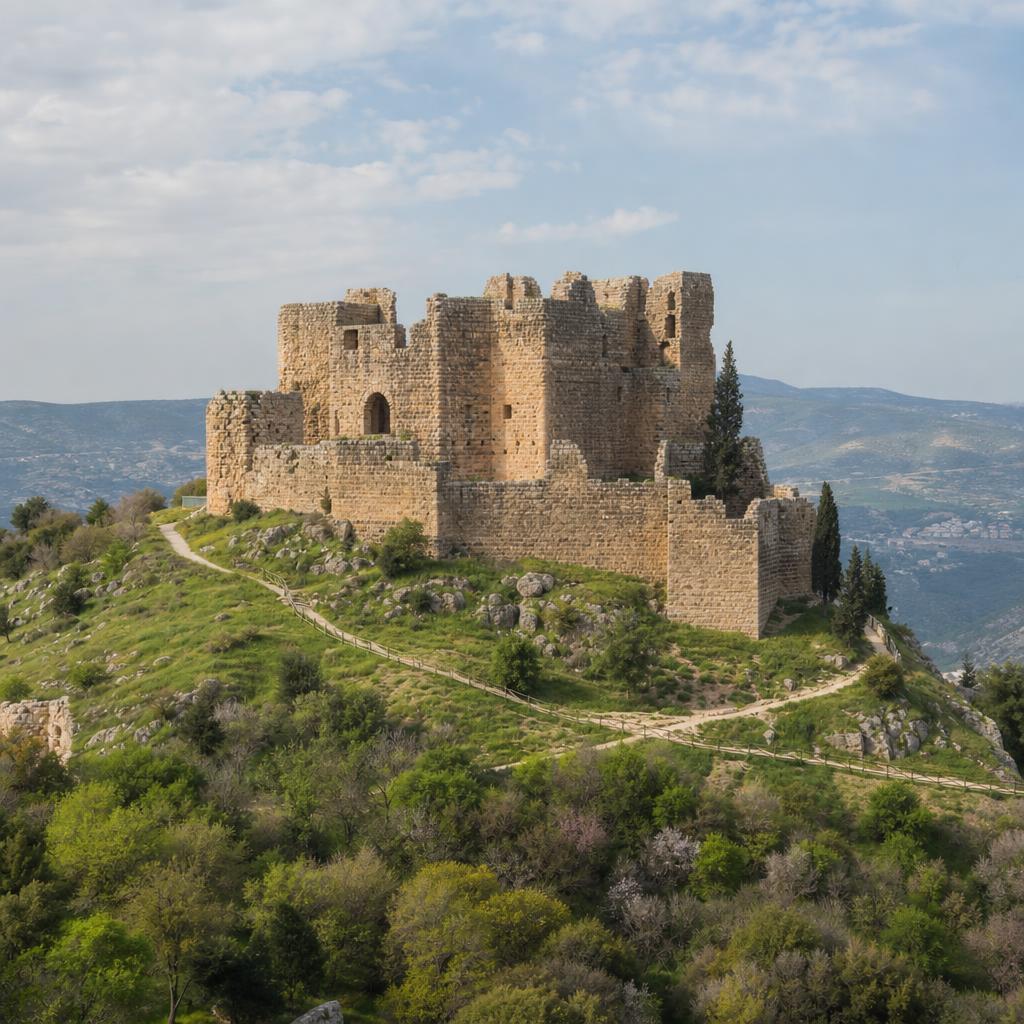
Ajloun is more than Ajloun Castle, although Qala’at ar-Rabad is the main reason most visitors come. The fortress was established during the Ayyubid period and later expanded, serving a strategic role in a region shaped by the Crusader-Ayyubid conflict. Its position on a hill makes its military logic immediately clear: visitors can look across the northern uplands and towards routes that once mattered for communication, trade and defence.
Allow roughly one to two hours at the castle itself, depending on crowds and how closely you explore the interior. Staircases, passages and uneven surfaces are part of the experience, so it is not a site to hurry through. The views are often best on a clear day, but mist and low cloud can give the forested landscape a compelling atmosphere in winter.
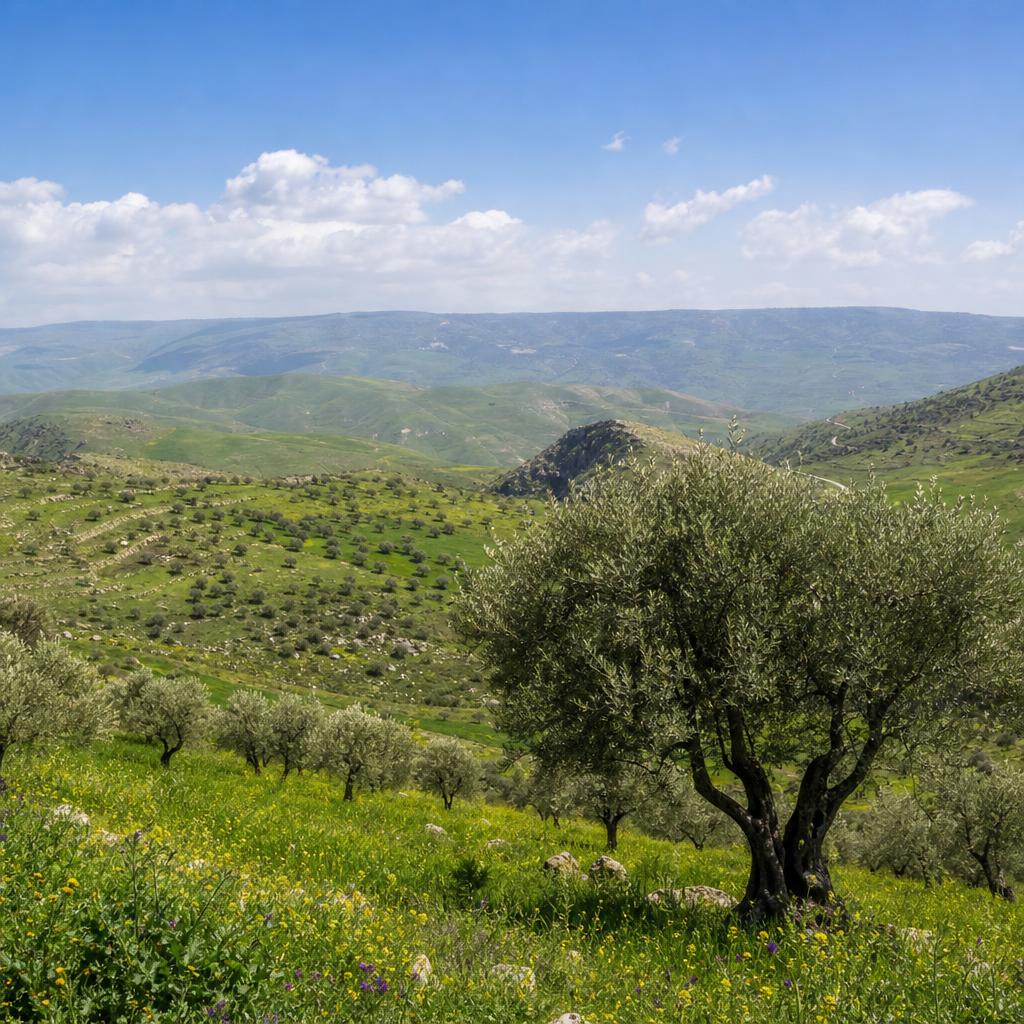
The wider Ajloun area is one of Jordan’s greener regions. Olive groves, oak woodland and agricultural terraces make a strong contrast with the desert scenery many visitors expect from the country. If nature is important to you, consider setting aside time for the Ajloun Forest Reserve area or a local walking route. Trails, access conditions, guides and seasonal suitability can change, so confirm current arrangements directly with the relevant reserve or operator rather than assuming a walk is available on arrival.
Ajloun works especially well after Jerash because the historical contrast is sharp: from a Roman provincial city to a medieval Islamic fortress in a wooded mountain setting. It is also a logical overnight area for travellers who want to break the journey before continuing to Umm Qais.
Umm Qais: basalt ruins and expansive views
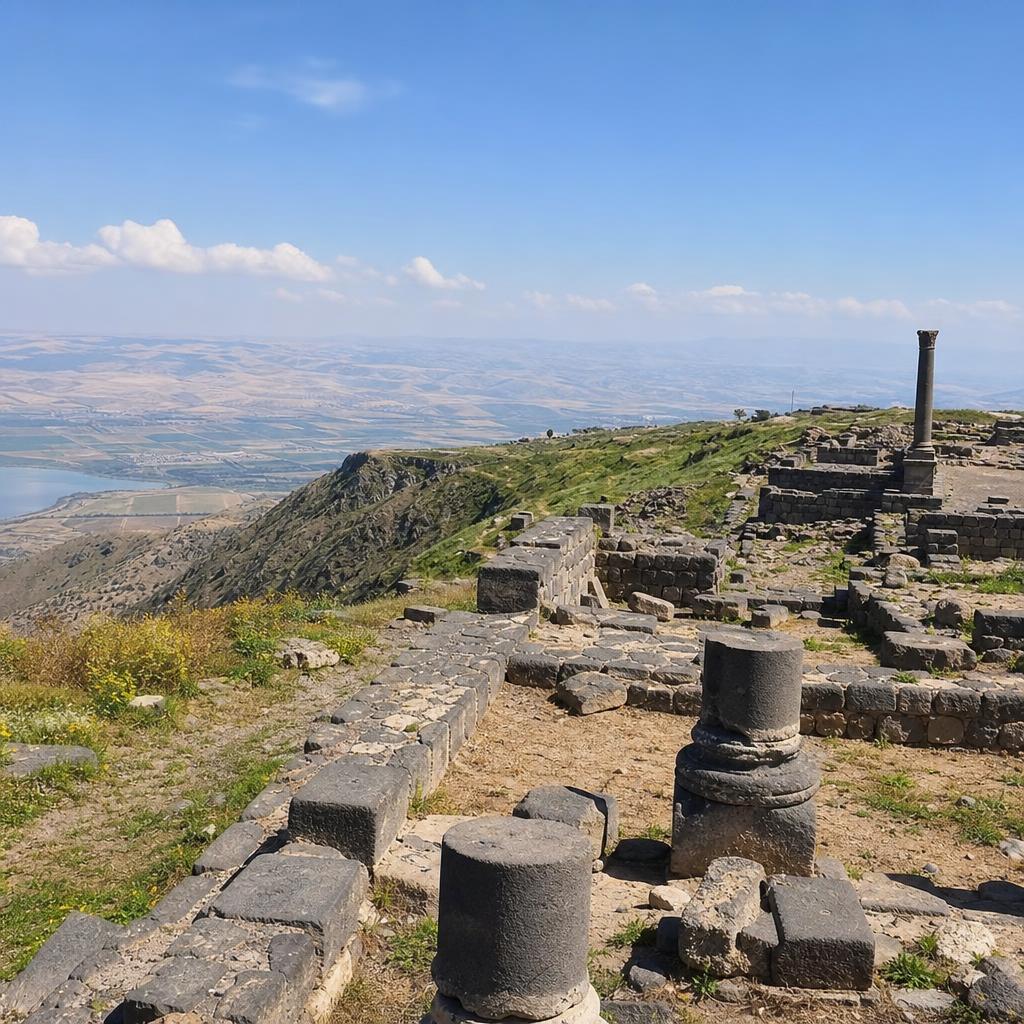
Umm Qais, the ancient city of Gadara, has a quieter, more contemplative character than Jerash. Rather than a vast field of pale limestone columns, it is distinguished by dark basalt architecture, a theatre, colonnaded streets, baths, tombs and later Ottoman-era buildings. The archaeological site sits above the Jordan Valley and the setting is central to the visit.
Plan at least two hours on site, more if you want to walk slowly, visit the museum spaces if open, or linger at the viewpoints. The uneven ground and broken paving deserve the same practical footwear as Jerash. In warm weather, the open site has limited shade in places; in winter, wind and rain can be more noticeable here than in sheltered urban areas.
Umm Qais is often included because it is one of Jordan’s Decapolis cities, but it should not be approached as merely “another Roman ruin.” Its borderland geography, basalt construction and layered settlement history make it distinct. It is also one of the country’s best locations for understanding how closely the landscapes of northern Jordan connect to neighbouring regions.
For travellers focused mainly on classical sites, Umm Qais and Jerash make an excellent two-day pairing. For those who also want woodland, medieval history and a slower route through villages, add Ajloun between them.
A realistic one-day North Jordan itinerary
A one-day North Jordan itinerary requires a choice. The best version for most first-time visitors is Jerash and Ajloun, starting early from Amman and returning after sunset or in the early evening depending on season and pace.
Option 1: Jerash and Ajloun from Amman
Begin with Jerash in the morning. This gives you cooler temperatures during the most exposed walking hours and allows time to see the principal monuments without continually watching the clock. Have an early lunch in or near Jerash, then drive to Ajloun for the castle and views.
A typical flow is:
- Morning departure from Amman.
- Two to four hours at Jerash.
- Lunch break around Jerash or on the route north-east towards Ajloun.
- Afternoon at Ajloun Castle.
- Optional short scenic stop in the Ajloun highlands if daylight and weather allow.
- Return to Amman.
This route provides a strong history-and-landscape balance without overloading the day. It is especially suitable for visitors with only a short stay in the capital or those who plan to devote later days to the Dead Sea, Petra or Wadi Rum.
Option 2: Jerash, Ajloun and Umm Qais in one long day
This is feasible only for travellers who are comfortable with a very early start, a full day in the vehicle, abbreviated visits and a late return. It works best when the goal is orientation rather than deep exploration. You may have time for the core circuit at Jerash, the castle at Ajloun and a focused walk at Umm Qais, but there is little margin for a leisurely meal, forest walk, museum visit or unexpected delay.
If you choose this option, arrange the order to reduce backtracking: Amman to Jerash, then Ajloun, then Umm Qais, followed by a direct return to Amman or an overnight in the north. Do not promise yourself a sunset at Umm Qais unless the day’s timing genuinely supports it; seasonal daylight, weather and the length of earlier visits matter.
A ready-made North of Jordan travel package may be useful for travellers who prefer a pre-planned framework, but always read the current itinerary details carefully to understand its pacing and what is or is not listed.
A two-day itinerary: the best balance for most travellers
Two days give the north the space it deserves. You can see Jerash properly on the first day, spend time in Ajloun’s hills and reach Umm Qais on the second without turning either day into a race.
Day 1: Amman to Jerash and Ajloun
Leave Amman after breakfast and visit Jerash first. Aim to be at the site early enough to enjoy the main monuments before the busiest and hottest period. After lunch, continue to Ajloun Castle. If you are staying in Ajloun or nearby, use the late afternoon for a scenic drive, a short local walk where conditions permit, or simply a slower dinner with views over the hills.
An overnight in Ajloun or the northern highlands has practical advantages. It shortens the feeling of the following day, removes the need to retrace your route to Amman and gives you a chance to experience a less urban side of Jordan. Accommodation standards and availability vary, so book according to current reviews and your preferred level of comfort.
Day 2: Ajloun to Umm Qais, then Amman or the Dead Sea
After breakfast, drive towards Umm Qais. This is the day to travel slowly enough to notice the change from wooded uplands to the more open north-western landscape. At Umm Qais, allow time for the ruins and viewpoints before deciding whether to return to Amman or continue south-west towards the Dead Sea.
Adding the Dead Sea at the end of day two can make sense if you are using it as an overnight stop rather than trying to fit in a full resort day. The route is longer than a direct return to Amman and daylight matters. Consider it a transition day with a memorable final landscape, not a quick add-on that guarantees extensive swimming, spa time and a relaxed dinner.
Travellers who want the north and the Dead Sea linked in one organised route can explore a two-day North Jordan and Dead Sea itinerary. Check the live page before booking for current route details, accommodation information and inclusions.
A three-day itinerary: archaeology, nature and onward travel
Three days is the most comfortable option for visitors who want all three principal sites while preserving time for the northern landscape. It also creates a logical bridge towards the Dead Sea and potentially, Petra.
Day 1: Jerash with a measured pace
Make Jerash the focus rather than the first box to tick. Arrive early, walk the main axis from the south through the Oval Plaza and Cardo, and climb towards the Temple of Artemis. Leave time to look beyond the famous columns: the churches, baths, theatres and city walls reveal how much more complex the settlement was than a ceremonial avenue.
Return to Amman for the night, or continue to Ajloun if you prefer to reduce driving the next morning. Staying in Amman offers more dining choices; staying farther north gives a quieter, more rural rhythm. Neither is inherently better.
Day 2: Ajloun Castle and the forested highlands
Spend the morning at Ajloun Castle, then give the afternoon to the surrounding landscape. Depending on weather, fitness, access and confirmed local arrangements, this could mean a reserve visit, a short walk, a village lunch or a scenic drive through olive-growing country. This is the day that turns the itinerary from a sequence of ruins into a fuller understanding of northern Jordan.
Avoid treating a nature stop as guaranteed. Seasonal rainfall, summer heat, trail conditions and operational changes all affect what is sensible. If walking is central to your trip, build flexibility into the plan and carry suitable clothing rather than relying on a last-minute decision.
Day 3: Umm Qais and the southern transition
Visit Umm Qais in the morning or early afternoon, allowing enough time to explore the basalt ruins and absorb the views. From there, you have three sensible choices:
- Return to Amman for a final night or onward flight logistics.
- Continue to the Dead Sea for an overnight and a slower evening by the water.
- Begin the longer southbound journey towards Petra, ideally with an overnight stop rather than expecting to arrive ready for a full Petra visit.
A three-day route combining North Jordan, the Dead Sea and Petra can be a useful reference for travellers considering that ambitious progression. It is a substantial itinerary, not a substitute for allowing proper time at Petra. Review the current schedule and stated services before relying on it.
Combining North Jordan with the Dead Sea and Petra
The north, the Dead Sea and Petra can be connected in one Jordan trip, but they represent three different geographic zones. Jerash, Ajloun and Umm Qais are in the north; the Dead Sea sits to the west and south-west of Amman; Petra is much farther south. Efficient routing matters more than trying to visit every landmark on consecutive days. If you continue south from the Dead Sea towards Petra, the King’s Highway road trip guide explains the main stops and realistic pacing.
North Jordan and the Dead Sea
The most natural combination is two or three days in the north followed by a Dead Sea overnight. This works particularly well if you want the Dead Sea as a rest stop after active archaeological sightseeing. It is less effective if you expect to arrive mid-afternoon after Umm Qais and still have a full day’s worth of resort activities.
Choose your Dead Sea accommodation with the next day in mind. If you are returning to Amman, the transfer is manageable. If you are continuing to Petra, expect a longer road day and plan an early departure. Current hotel access arrangements, beach policies and services vary, so verify details directly before booking.
North Jordan and Petra
Petra deserves dedicated time. A rushed arrival after driving from Umm Qais or the Dead Sea is not the same as a proper Petra day. For many travellers, the best plan is to place Petra after an overnight near the Dead Sea or in another convenient stop along the southbound route, then spend at least one full day at the archaeological site.
If your total time in Jordan is limited, decide where your priorities lie. A traveller fascinated by Roman and Byzantine history may choose Jerash and Umm Qais over an extra night in Wadi Rum. Someone whose central goal is Petra may visit Jerash as a day trip and leave Umm Qais for a future journey. The country is more rewarding when you make deliberate choices.
For a broader sense of how these destinations compare with other highlights, see this guide to the best places to visit across Jordan. If you are still deciding the overall pace, the practical advice in how many days to spend in Jordan is a useful starting point.
Transport, timing and practical preparation
Choose a route that matches your travel style
Self-driving offers flexibility, but northern Jordan’s routes involve city traffic, changing road conditions, rural navigation and unfamiliar parking arrangements. A driver can remove those logistical demands, particularly for families, small groups, travellers carrying luggage between hotels, or anyone who wants to spend the journey looking at the landscape rather than following directions.
For multi-stop journeys, pre-arranged transport also makes it easier to build sensible pickup and drop-off points into the route. Browse the company’s wider range of Jordan travel packages if you want ideas for combining regions, then confirm the current itinerary directly with the provider.
What to carry
Northern Jordan is not a desert-only itinerary. Conditions can shift significantly between Amman, the Ajloun hills and the exposed viewpoints at Umm Qais. Pack for walking and layers rather than relying on the forecast for one location.
- Comfortable, closed walking shoes with good grip.
- Water, sun protection and a hat for Jerash and Umm Qais.
- A light waterproof or warm outer layer in cooler months, especially for Ajloun.
- A power bank and offline maps if driving yourself.
- Small cash for incidental purchases, while checking in advance which payment methods individual businesses accept.
- Modest, practical clothing suitable for archaeological sites, rural communities and changing weather.
Check current information before departure
Opening arrangements, ticketing, road conditions, weather warnings, site access and museum availability can change. Check official tourism and site information close to your travel date, especially if visiting during public holidays, Ramadan, winter storms or peak summer heat. If you are arranging a guide, reserve walk, meal experience or specialised activity, confirm exactly what is included, where the meeting point is and whether transport is part of the booking.
The right North Jordan itinerary for your trip
Choose one day if Jerash and Ajloun are your priority and you are based in Amman. Choose two days if Umm Qais matters to you and you want to travel at a humane pace. Choose three days if you also want Ajloun’s landscapes, an overnight outside the capital, or a smoother continuation towards the Dead Sea and Petra.
The essential principle is simple: do not judge northern Jordan by how many sites fit into a map pin sequence. Jerash rewards attention to detail, Ajloun adds greenery and medieval history and Umm Qais offers a setting unlike anywhere else in the country. Give each place enough time and the north becomes one of the most varied parts of a Jordan itinerary rather than a hurried detour from Amman.