Getting around Jordan is the easiest when you choose the right transportation for your route.....
Getting around Jordan is easiest when you choose transport for your route, luggage and timing. Compare private drivers, rental cars, buses, taxis, ride-hailing and airport transfers, with practical advice for Petra, Wadi Rum, families, remote stays and multi-destination itineraries.
Start With Your Route, Not Your Vehicle
Getting around Jordan is straightforward once you match the transport method to the shape of your trip. The country’s headline stops—Amman, Jerash, the Dead Sea, Madaba, Mount Nebo, Petra, Wadi Rum and Aqaba—are connected by roads that make point-to-point travel practical. Yet the best choice can change dramatically depending on whether you are travelling alone, carrying hiking gear, arriving late, visiting with children, or trying to reach a desert camp after Petra.
There is no single “right” way to travel around Jordan. A rental car may suit confident drivers who want to stop often and stay outside the main tourism corridor. Buses can work well for travellers with time and light luggage. Taxis are useful for short urban journeys. A private driver is often the simplest option for multi-stop itineraries, airport arrivals and journeys where time, comfort or navigation matter more than having a car at your disposal.
Before deciding, sketch your actual route and count travel days rather than destinations. A one-night stay in Petra followed by Wadi Rum is very different from a week based in Amman. Also consider where each overnight stay is located: a hotel in central Amman, a resort on the Dead Sea, a Petra property outside Wadi Musa, and a camp inside Wadi Rum Protected Area all create different last-mile transport needs.
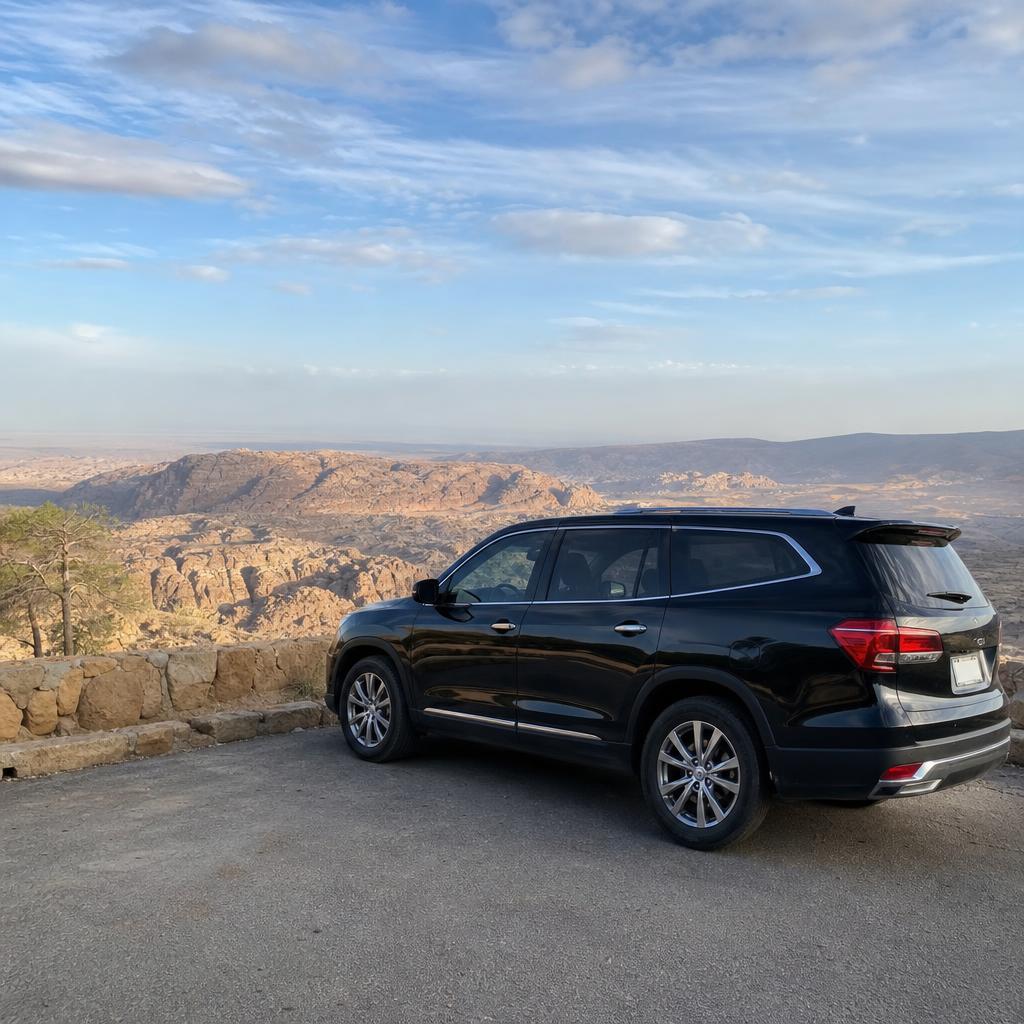
The Main Ways of Getting Around Jordan
Private driver: best for efficient multi-stop travel
Hiring a private driver is a practical middle ground between a self-drive holiday and a fully escorted tour. You retain control over the itinerary, pace and accommodation, while someone else handles the driving, road navigation, parking and long intercity stretches. It is especially useful when your trip involves several one-way journeys rather than returning repeatedly to the same base.
A private driver in Jordan can make sense for routes such as Amman to the Dead Sea and Madaba, Amman to Petra via the King’s Highway, Petra to Wadi Rum, or Wadi Rum to Aqaba. It can also be helpful for travellers arriving on an overnight flight, families managing car seats and bags, older visitors, and groups sharing the cost of one vehicle.
The principal advantages are simplicity and time management. You can leave when it suits your party, make reasonable stops en route, and avoid collecting and returning a rental car. On a long day, that can be more valuable than it first appears. The journey from Amman to Petra, for example, is not just a question of road distance; it may involve hotel checkout, rest breaks, lunch, luggage, arrival timing and the walk or shuttle arrangements at your destination.
Private transport does not automatically mean that every excursion, guide, meal, entry ticket or desert activity is included. Confirm exactly what is covered before booking: vehicle type, passenger and luggage capacity, waiting time, route, stops, fuel, tolls where applicable, driver accommodation on overnight itineraries, and whether any local activity is arranged separately. It is also wise to agree on pickup location and time in writing.
Costs vary with route, vehicle size, season, hours on the road, waiting time and whether the booking is a simple transfer or a multi-day itinerary. For a useful planning framework, see this overview of private driver costs in Jordan. Comparing like with like matters: a low quoted transfer price may not cover an all-day vehicle at your disposal, while a larger vehicle can be better value per person for a family or small group.
Rental car: best for independent travellers comfortable driving
A rental car gives you the greatest independence. It is well suited to travellers who enjoy self-guided road trips, want to explore at an unhurried pace, and are comfortable driving in unfamiliar conditions. It can be particularly appealing for a longer itinerary with rural overnight stops, repeat visits to the same region, or detours that are difficult to arrange by bus.
Jordan’s main intercity roads connect the major visitor destinations effectively, but driving conditions vary by location and time of day. Amman’s traffic, multilane junctions, changing lane patterns and steep streets can feel demanding to drivers unfamiliar with the city. Outside urban areas, distances can be deceptively long, night driving may be less comfortable, and fuel, food and rest-stop planning becomes more important. Drive defensively, keep your documents available, and follow current local road rules and posted signs.
A rental car can be a good fit if you want to visit places such as Ajloun, Umm Qais, Dana, the King’s Highway viewpoints or smaller villages without relying on a fixed timetable. It also gives you flexibility for sunrise departures and unplanned photo stops. However, independence comes with responsibilities: parking, navigation, fuel, insurance choices, vehicle inspection and the eventual return process.
Think carefully about one-way travel. If your itinerary ends in Aqaba or begins at the airport and finishes in Amman, check whether your rental arrangement permits a different drop-off point and what charges or conditions may apply. Do not assume that every rental company offers the same locations, vehicle categories or cross-region arrangements. Confirm current terms directly with the provider.
For many travellers, the key question is not whether they can drive in Jordan, but whether they want to spend valuable holiday time doing so. If your itinerary includes only Amman, Petra, Wadi Rum and Aqaba, a rental car may sit parked for much of the trip. If it includes several independent countryside stops, it may be the most efficient choice.
Buses: best for budget-conscious, flexible schedules
Buses and shared minibuses can be an economical way of getting around Jordan, especially for travellers who are not in a rush and are comfortable adapting to local schedules. They are most useful on popular routes, though service patterns, departure points and frequency can vary by day, season and demand. Check current information locally or through official and operator channels before relying on a connection.
The main trade-off is time certainty. A route that appears simple on a map can involve getting to a terminal, waiting for departure, making a connection and arranging transport from the arrival point to your hotel. This is manageable for a relaxed itinerary, but less appealing if you have a late-afternoon Petra arrival, a fixed camp check-in, a flight the next day or limited time in the country.
Buses work best when:
- You are travelling solo and watching your budget.
- You have a flexible itinerary with spare time between destinations.
- You are carrying a manageable amount of luggage.
- Your accommodation is close to the departure or arrival area.
- You are travelling between major cities rather than remote sites.
They are less convenient for families with young children, travellers with bulky luggage, people arriving late at night, and visitors aiming to combine several sights in one day. A bus can be inexpensive, but a missed connection, extra taxi and lost sightseeing time may change the overall value calculation.
Shared minibuses can be useful for local movement, but their departure timing may depend on passenger demand rather than a rigid schedule. Treat them as an experience that rewards patience, not as the foundation of a tightly timed itinerary.
Taxis: best for short urban trips and simple point-to-point rides
Taxis are an important part of daily transport in Amman and other urban areas. They are generally most useful for short journeys: moving between neighbourhoods, reaching a restaurant, getting to a bus terminal, or travelling from a hotel to a nearby attraction. For visitors, taxis can also solve the awkward “first and last kilometre” that buses do not cover.
Agree on the expected fare or ensure that the meter is used where relevant before beginning a journey. Carry smaller notes when possible, confirm the destination clearly, and allow extra time in Amman traffic. Hotel staff can often help communicate a destination or arrange a car when language or pickup location is uncertain.
For longer intercity routes, a taxi may be possible but is not always the most transparent or comfortable choice. The price should be agreed in advance, and you should clarify whether the driver is making a one-way journey, waiting, or returning with you. For a day trip with several stops, a pre-arranged driver may be easier to plan than negotiating individual taxi legs.
Ride-hailing: useful where it operates, but not a countrywide solution
Ride-hailing apps may be available in some locations, particularly in and around Amman, and can be convenient for visitors who prefer to see a quoted fare and pickup details on their phone. Availability, coverage, payment methods and local regulations can change, so check the app and current local guidance when you arrive.
Do not assume that app-based rides will be readily available outside main urban areas, at remote hotels, at desert access points or late at night. Mobile data coverage and driver supply may also affect pickup reliability. For important departures—such as a flight, a long-distance transfer or a connection to a Wadi Rum camp—pre-arranged transport is generally the lower-stress option.
Airport Transfers: Make Arrival Day Easy
Queen Alia International Airport is the principal air gateway for many international visitors, and arrival day is often when transport planning matters most. After a long flight, the appeal of a confirmed pickup is not luxury; it is avoiding uncertainty while tired, carrying bags and adjusting to a new country.
A pre-booked Amman airport private driver is especially useful for late arrivals, families, groups, travellers landing with large luggage, or those going directly to the Dead Sea, Madaba, Petra or another destination outside central Amman. Confirm the meeting procedure, flight details, arrival terminal information if relevant, luggage allowance and what happens if your flight timing changes.
If you are renting a car, consider whether you genuinely need it from the first night. Collecting a vehicle after a late flight can be efficient for some travellers, but others prefer to spend their first night in Amman and begin driving after rest. If you are using public transport, verify current airport connections and the location of your final hotel, since you may still need a taxi after arrival in the city.
For departures, build in more time than a map estimate suggests. Traffic, hotel checkout, luggage, airport procedures and return-car formalities can all affect the journey. Check current airline and airport guidance for recommended arrival times rather than relying on a generic rule.
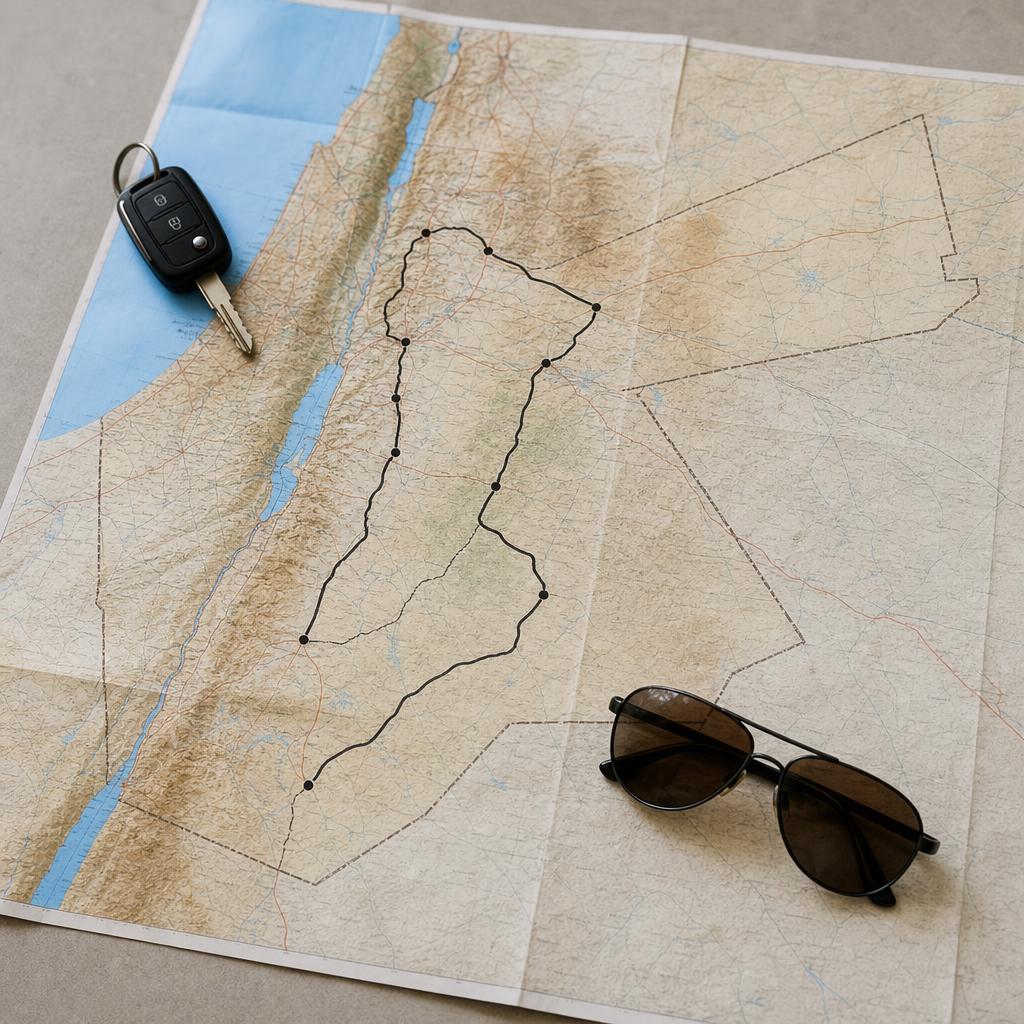
Comparing Transport by Route
Amman to Petra
Amman to Petra is one of the journeys where transport choice has a major impact on the day. A direct road journey is one thing; travelling via Madaba, Mount Nebo, the Dead Sea or the King’s Highway is another. The King’s Highway is scenic and historically rich, but it is not the route to choose if your sole priority is the quickest possible transfer.
A private transfer from Amman to Petra suits travellers who want a direct, door-to-door journey or who would like to build selected stops into the route. It is particularly practical if you are checking into a Petra hotel, planning an early archaeological-site visit the following morning, or travelling with luggage that would make multiple transport changes inconvenient.
A rental car is a strong alternative for independent travellers, particularly if you want to choose your own stops. Buses may cost less, but check current departures carefully and consider where you will arrive in relation to your hotel. Taxis are generally better treated as a backup or negotiated option than as the default plan for this major intercity route.
Petra to Wadi Rum
Petra to Wadi Rum is a classic onward journey, but it deserves more planning than its popularity suggests. Wadi Rum is not simply a town-to-town transfer. Visitors often need to reach a designated meeting point or visitor area, where a camp or local operator may arrange onward access. The exact process depends on your accommodation and activity plans.
A Petra to Wadi Rum transfer can simplify this transition by connecting two major destinations without requiring you to return to Amman or manage a complicated public-transport day. Before confirming transport, ask your Wadi Rum accommodation where the driver should drop you, what time you should arrive, and whether onward desert transport is included in your stay or must be arranged separately.
Self-driving visitors should be especially careful not to assume that an ordinary rental car can be driven everywhere in the desert. Access routes, parking areas and off-road travel requirements differ. Follow the instructions of your accommodation and local authorities, and arrange any desert activity with an appropriate local provider.
Wadi Rum to Aqaba
The route from Wadi Rum to Aqaba is comparatively logical for travellers continuing south to the Red Sea. It can work well by private transfer or rental car, provided your pickup and drop-off details are clear. The practical issue is timing: desert departures may depend on the camp’s vehicle arrangements, breakfast, activities and the meeting point outside the protected area.
For travellers with an Aqaba flight, diving booking or hotel check-in, avoid building an overly tight connection. Confirm the expected pickup location in Wadi Rum and allow a buffer for the handover from camp transport to your onward vehicle.
Amman, Jerash and the north
Northern Jordan can be rewarding by rental car or private driver because attractions are spread across the region. Jerash is commonly combined with Ajloun, and a longer day may include Umm Qais depending on your pace. Buses and taxis can work for individual journeys, but they may make a multi-stop day feel fragmented.
A private driver is useful when several people are sharing the day and want to travel at their own speed. A rental car is attractive for travellers happy to navigate independently. For either option, avoid trying to see every northern site in a rushed single day; archaeological sites, viewpoints and meals take longer than a route plan suggests.
Cost: Look at the Whole Day, Not Just the Fare
Transport budgets are often distorted by comparing only the initial ticket or rental rate. A more useful approach is to calculate the full cost of a travel day. The broader Jordan travel costs guide can help place transport within the full trip budget.
For a rental car, include the rental rate, insurance choices, fuel, parking, possible one-way charges, deposit requirements and the cost of time spent collecting and returning the vehicle. For buses, include taxis to and from terminals, baggage handling where relevant, meals or accommodation needed because of limited schedules, and the value of a shortened sightseeing day. For private transport, compare the full vehicle quote against the number of travellers and confirm the inclusions.
For a couple, a bus may be the lowest cash-cost option on a straightforward route. For a family of four or a small group with luggage, a private vehicle can become more competitive once separate tickets and taxi connections are added. A rental car may offer the best value for a week of independent exploration, but less so for a short linear route ending far from the original pickup point.
Do not choose solely on price if the trip has a fixed deadline. Missing a Petra afternoon, arriving after a camp’s arranged meeting time, or making a stressful airport run can cost more in experience than the transport saving is worth.
Luggage, Families and Accessibility Considerations
Luggage is one of the most overlooked factors in getting around Jordan. A compact suitcase and daypack are easy to manage on buses and taxis. Several large cases, a stroller, hiking equipment or photography gear change the equation. Before booking any vehicle, ask about both passenger seats and practical luggage space; vehicle categories can be described differently by different providers.
Families should prioritise predictable pickup times, enough room, rest breaks and accommodation access. If children need specific safety equipment, raise the request while booking rather than assuming it will be available. Requirements and availability can vary, so confirm the details directly with the transport provider.
Travellers with limited mobility should research each destination separately. Petra’s terrain, Amman’s hills, historic sites and desert settings all present different physical demands. Transport can reduce walking between destinations, but it does not remove the accessibility considerations within them. Discuss pickup points, vehicle entry, luggage assistance and route needs in advance, and consult official visitor information for current accessibility arrangements at major sites.
Remote Sites and the Importance of Last-Mile Planning
Jordan’s most memorable landscapes are not always reached by standard city transport. Wadi Rum, Dana, certain Dead Sea properties, trailheads and rural guesthouses can require an additional arrangement after the main road journey. This is where an itinerary can fail if the last mile is left vague.
For every remote overnight stop, ask four questions:
- What is the exact road-accessible drop-off point?
- Is there a required meeting time?
- Who arranges the final transfer, if one is needed?
- What is the backup plan if your arrival is delayed?
This is particularly important in Wadi Rum. A camp stay and a desert Jeep excursion are separate services unless your accommodation or booking confirmation explicitly states otherwise. Likewise, a transfer to the Wadi Rum area should not be assumed to include activities, entry arrangements or overnight camp transport.
If you want a short, structured Petra-and-Wadi-Rum itinerary, review the details and inclusions of this three-day Petra and Wadi Rum experience before making plans around it. Check current departure arrangements, accommodation details, activities and what transport is explicitly listed.
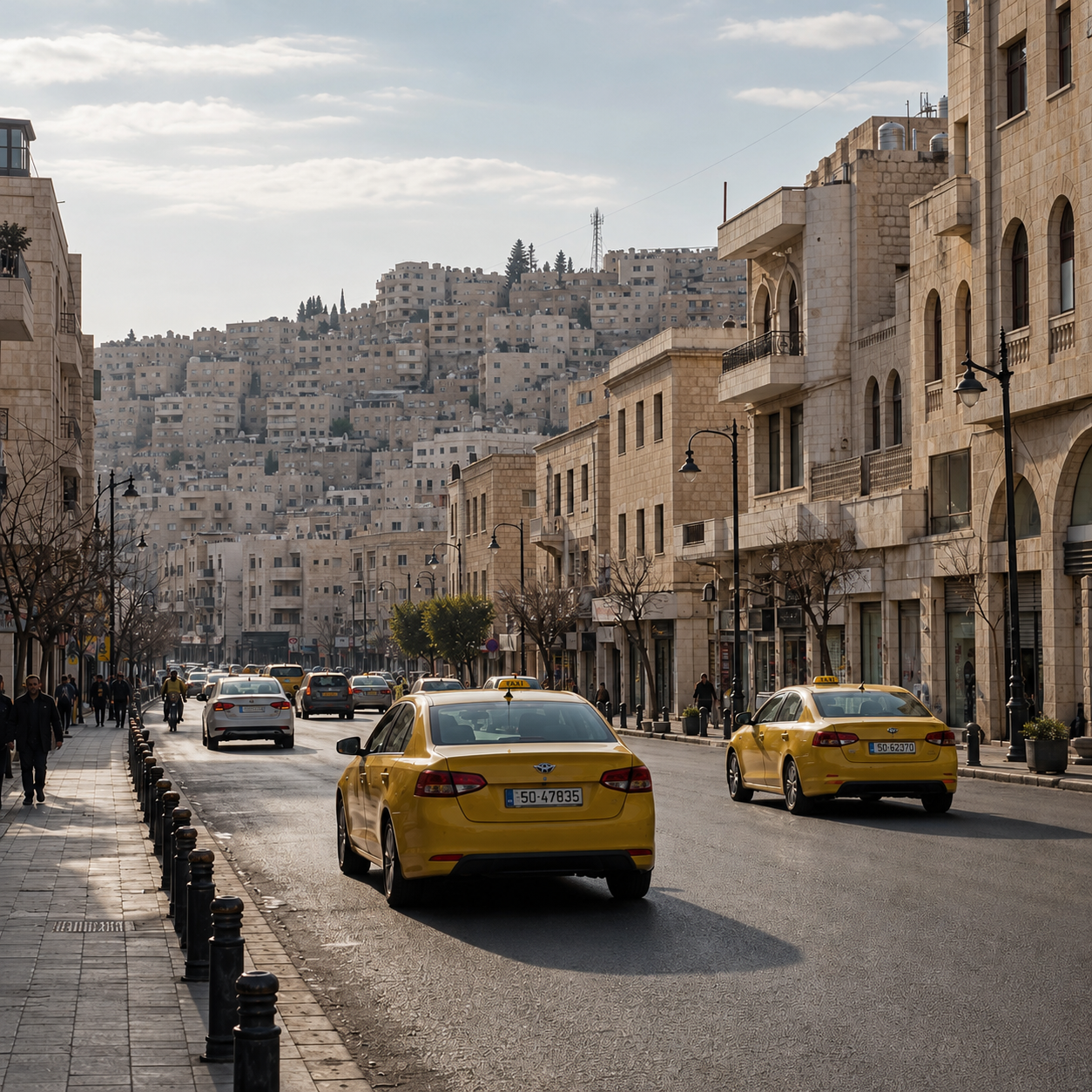
A Practical Decision Guide
Choose a private driver if you want efficient point-to-point travel, several stops in a day, door-to-door service, help with long intercity routes, or a comfortable option for family members and luggage. It is often the strongest choice for a short trip with a linear route.
Choose a rental car if independence is central to your trip, you are confident driving abroad, and you want to explore smaller places at your own pace. It is especially worthwhile when your itinerary has multiple rural detours or several nights outside the main city-to-city corridor.
Choose buses if budget is your priority, you are travelling lightly, and you can leave time for waiting and schedule changes. They are best treated as a flexible travel tool rather than a guaranteed precision service.
Choose taxis or ride-hailing for city journeys, terminal connections and short trips where parking and navigation would be more trouble than they are worth. For longer routes, agree details carefully or use a pre-arranged transfer.
A mixed approach is often the most sensible answer. You might use a private airport transfer on arrival, explore Amman by taxi or ride-hailing, take a private driver or rental car south to Petra and Wadi Rum, then arrange a final transfer to Aqaba. There is no prize for using one transport method throughout the country.
Final Planning Checklist
Before finalising your Jordan itinerary, check current information and put the practical details in one place:
- Confirm every hotel’s exact location and pickup access.
- Check current road conditions, especially before long drives or winter travel.
- Verify public-transport departures directly from current sources.
- Confirm vehicle size, luggage capacity and child-seat needs.
- Clarify whether your booking is a direct transfer, waiting service or multi-day driver arrangement.
- Ask Wadi Rum accommodation about its required meeting point and onward camp transfer.
- Keep some flexibility around airport journeys, desert transfers and major intercity travel days.
- Save accommodation contacts and destination names offline in case mobile service is limited.
Getting around Jordan becomes much easier when transport is planned as part of the itinerary rather than added at the end. Choose the option that protects the time you most want to spend in Petra, the desert, the north or beside the Red Sea—and make the handovers between those places as clear as the journeys themselves.